

For a Maryland hospital visit in 2026, request an itemized mobile-notary quote that separates the notarial service from any agreed travel or other appointment charges. Before arranging travel, check whether the document is eligible for Maryland remote online notarization through Proof and whether the receiving organization accepts that format. A hospital appointment also depends on patient readiness, identity verification, facility access, and the notary’s confirmation—not just the quoted total.
- For mobile notary hospital visit cost Maryland comparisons, request an itemized quote rather than comparing a headline fee.
- CraigVet Notary Services offers Maryland remote online notarization through Proof for eligible documents; confirm recipient acceptance first.
- Confirm Baltimore County mobile availability before booking; a request is not a confirmed appointment.
- Prepare identification, document instructions, witness arrangements, and hospital access details before the appointment.
Why this matters
A hospital notarization requires more coordination than a routine signing. The patient must participate in the required procedure, and the appointment must fit hospital access rules and care needs. An attractive quote does not solve an identification problem or make an unsuitable document eligible.
CraigVet Notary Services provides Maryland remote online notarization through Proof, with mobile appointments as a secondary option. Check remote eligibility first; arrange bedside travel when the document, recipient, or signer’s circumstances require an in-person appointment. Baltimore County mobile availability must be confirmed before booking.
How much does a mobile notary cost for a hospital visit in Maryland?
The figure to compare is the complete, agreed appointment quote—not an isolated notarial fee. Ask the provider to identify what the quote covers, which charges depend on travel or appointment circumstances, and what happens if the notarization cannot proceed.
For a hospital visit in 2026, use this breakdown when requesting a quote. These are questions to resolve, not a statement that every provider imposes each charge.
| Quote component | What to ask | Why it matters |
|---|---|---|
| Notarial service | Which requested notarial acts does the quote cover? | A document packet can contain separate signing or certificate requirements. |
| Travel | Is travel included, and how is any travel charge determined? | A mobile appointment requires the notary to reach the hospital. |
| Hospital access | Does the quote account for the stated entrance, unit, and check-in process? | Reaching the building is different from reaching the patient. |
| Waiting or changes | What terms apply if care interrupts the appointment or access is delayed? | The patient’s care schedule takes priority. |
| Incomplete appointment | What applies if identity verification or the signing cannot be completed? | Arrival does not guarantee that a notarial act can proceed. |
Ask for the terms in writing before agreeing to travel. Confirm the provider’s current charges and applicable Maryland notarial requirements rather than treating another family’s appointment as a reliable estimate for yours.
Remote online notarization: best for eligible documents
Maryland remote online notarization through Proof is the first option to check when a patient can participate electronically and the receiving organization accepts the resulting document. It removes the need for the notary to travel to the bedside, but it does not remove identity verification or other required safeguards.
CraigVet Notary Services is best suited to Maryland individuals and businesses seeking remote online notarization for eligible documents. Its mobile service provides a separate appointment route when in-person attendance is needed and availability is confirmed.
The remote route has practical limits. The signer needs suitable technology and must complete the required verification and live session. Do not assume a phone camera, an uploaded signature, or a family member’s assistance makes every document suitable for remote notarization.
Before choosing the format in 2026, ask the recipient whether it requires a particular signing method, original paper, or additional witnesses. Recipient instructions and legal document requirements are separate from the convenience of an online appointment.
Mobile hospital appointments: best for required in-person signing
A mobile appointment brings the notary to the hospital for an in-person procedure. This is the route to discuss when electronic participation is unsuitable or when the receiving organization requires an in-person notarization.
The advantage is bedside attendance. The limitation is coordination: the notary needs confirmed availability, hospital access, an available signer, and a document ready for the requested notarial act. A submitted appointment request is not a confirmed visit. Wait for direct contact and confirmation before coordinating around a proposed arrival.
| Option | Best for | Main advantage | Main limitation |
|---|---|---|---|
| Remote online notarization through Proof | Eligible documents and signers able to participate electronically | No bedside travel by the notary | Requires suitable technology, identity verification, and an acceptable document format |
| Mobile hospital appointment | Documents or circumstances requiring in-person attendance | The notary attends the hospital | Depends on confirmed availability, facility access, and patient readiness |
Neither format makes an unsuitable signing acceptable. Choose the procedure that fits the document and signer, then compare the complete appointment terms.
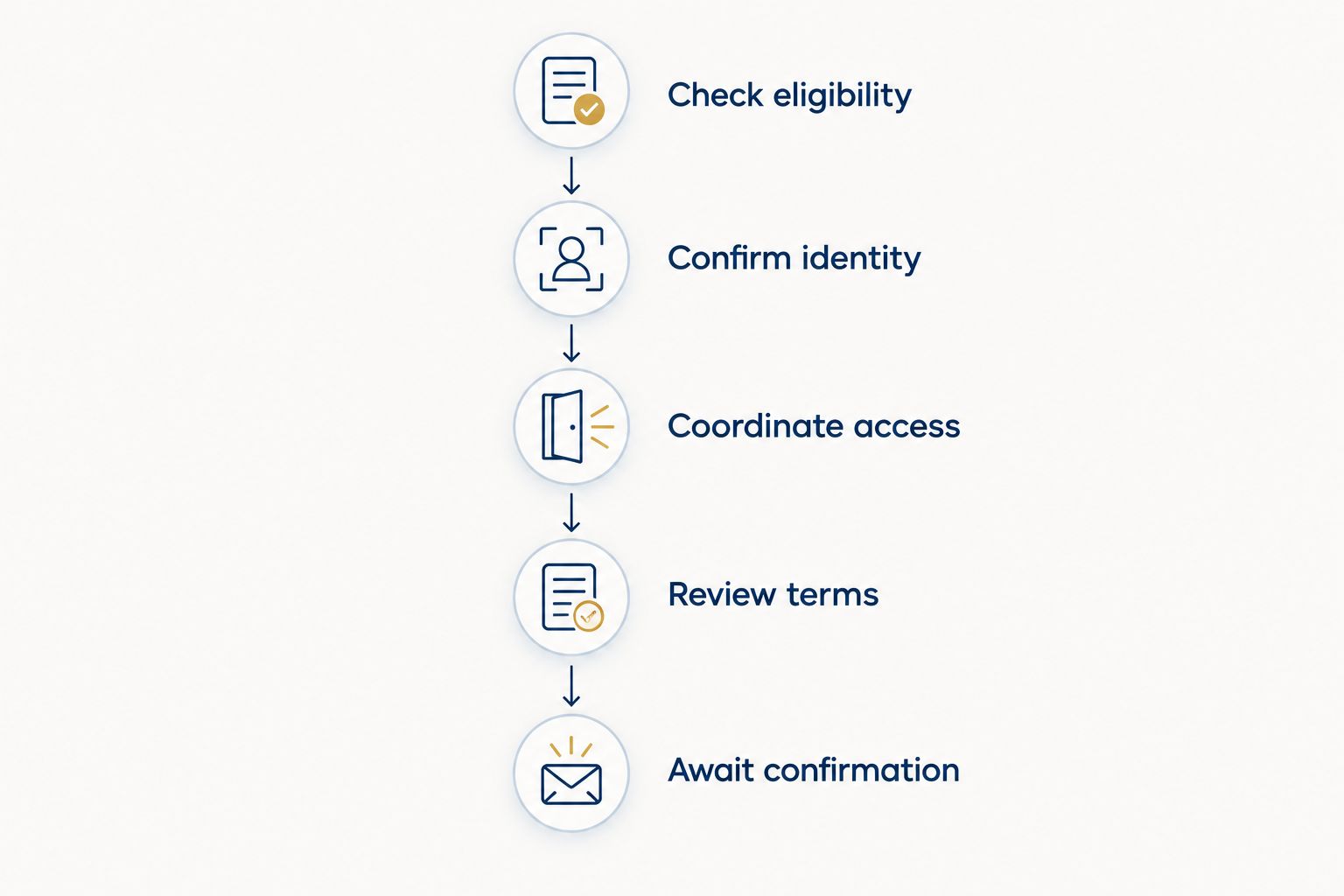
How do you arrange a hospital notarization?
Use this sequence before asking a notary to travel. It helps you identify the issues that must be resolved before an appointment can proceed.
- Check eligibility. Identify the document, its recipient, and the requested signing format. Ask whether remote online notarization is acceptable before committing to a mobile visit. Do not ask the notary to choose a legal document or determine which legal powers it should contain.
- Confirm identity. Tell the notary what identification the signer has available and ask what verification is required for the selected method. Do not send identity documents through an unconfirmed communication channel or assume a relative can verify identity instead.
- Coordinate access. Confirm the hospital campus, entrance, unit, visitor process, and appropriate contact. Ask hospital staff about restrictions affecting outside visitors and coordinate around care without requesting unnecessary medical disclosures.
- Review terms. Obtain the complete quote and clarify travel, delays, changes, and an unsuccessful visit. Confirm who is arranging the appointment and who is responsible for payment without assuming they must be the signer.
- Await confirmation. Wait until the notary contacts you and confirms the arrangements. Follow the signing instructions provided; do not assume every document should be signed beforehand or that every previously signed document must be replaced.
Keep the information together so the family contact, hospital contact, and notary are working from the same instructions. Share only the personal and medical information needed to coordinate the appointment.
Why hospital notary quotes vary
Hospital appointments differ in the work and coordination they require. When comparing quotes in 2026, give each provider the same appointment details and ask how those details affect the proposed terms.
- Appointment format. Remote and mobile appointments use different procedures. Confirm which format the quote describes rather than comparing them as interchangeable services.
- Travel destination. Give the exact hospital and campus. A location name alone does not explain where the notary needs to arrive or how to reach the patient.
- Document requirements. Identify the requested documents, notarial acts, and recipient instructions. Do not describe a packet as a single signature without checking its contents.
- Signer participation. Explain who needs to appear and whether each signer can complete the required procedure. A family member’s availability does not establish the patient’s readiness.
- Access and timing. Disclose known visitor restrictions and appointment constraints. Ask what happens if treatment, a transfer, or a discharge changes the arrangements.
These details support an accurate quote; they do not establish permission for every proposed charge. Ask the provider to explain the basis for its terms and confirm compliance with Maryland requirements.
What should you check before paying for a hospital visit?
Confirm that the appointment has a workable signing plan before authorizing travel. The notary must assess whether the required notarial procedure can be completed; a family’s urgency does not replace the signer’s participation.
Can the patient participate voluntarily?
The patient must participate willingly in the required procedure. Tell the notary about practical communication or participation concerns before the appointment rather than assuming a bedside signature will resolve them.
Hospitalization alone does not answer whether notarization can proceed. Do not ask the notary to diagnose the patient or make a medical determination. If medication, fatigue, or treatment affects participation, coordinate with the care team and discuss scheduling with the notary.
Are witnesses required separately?
Witness requirements depend on the document and applicable law. Ask the document preparer or receiving organization what is required, then confirm who will arrange eligible witnesses.
Do not assume the notary serves as every required witness or that hospital employees will participate. A notarial certificate and a witness signature perform different functions.
Is the document legally ready?
Obtain the appropriate document and legal instructions before the appointment. Craig is not an attorney and cannot provide legal advice. Questions about powers of attorney, healthcare directives, authority to sign for someone else, or the legal effect of a document belong with a qualified attorney or the responsible recipient, as appropriate.
Can a hospital patient use an online notary instead?
A hospital patient can use remote online notarization when the document is eligible, the signer can complete the required procedure, and the recipient accepts the format. Being in a hospital does not itself decide the appointment method.
For a 2026 appointment, check the patient’s access to a suitable device, a reliable connection, and an appropriate place for the live session. Ask about identity verification before the session rather than waiting until the document is ready to sign.
Does a bedside appointment guarantee notarization?
A bedside appointment does not guarantee a completed notarization. Identity verification, willingness, required participation, document readiness, and access still matter after the notary arrives.
Ask about incomplete-appointment terms before authorizing travel. That discussion should happen before an urgent situation leaves the family comparing expectations at the bedside.
What should a business arrange for repeat notarizations?
A business coordinating repeat notarizations should use a consistent intake process without assuming every signer or document has the same requirements. Keep recipient instructions, signer contact details, document format, and appointment responsibilities clear.
For eligible documents, assess remote online notarization first. For hospital visits, reconfirm the location, access arrangements, and signer’s readiness each time; previous appointments do not establish current availability or eligibility.
FAQ
How do I get an accurate mobile notary hospital visit quote in Maryland?
Provide the hospital location, document requirements, signer details, and requested appointment arrangements, then request an itemized quote. Clarify travel, delays, changes, and incomplete-appointment terms before agreeing to the visit.
Is remote online notarization an option for someone in a Maryland hospital?
Remote online notarization is an option for eligible documents when the patient can complete the required electronic procedure and the recipient accepts the format. Confirm technology access and identity verification requirements before arranging the session.
Can I book a hospital notary appointment for my parent?
You can coordinate an appointment request for your parent, but your parent must participate in the required notarial procedure. Explain who will sign, what identification is available, and how the notary can reach the patient.
Does submitting a request confirm a Baltimore County mobile appointment?
Submitting a request does not confirm a Baltimore County mobile appointment. Wait for direct contact and confirmation of availability, location, and appointment terms.
Should the patient sign the document before the notary arrives?
Follow the notary’s instructions for the particular document and requested notarial act. Some procedures require signing in the notary’s presence, so do not assume signing ahead is appropriate.
Can the notary tell us which power of attorney form to use?
Craig is not an attorney and cannot provide legal advice or choose a legal form for you. Obtain legal guidance about the document and its effect before arranging notarization.
One last thing
Confirm what the recipient needs to receive after the signing—not only how the signature will be notarized. Ask whether it expects an electronic document or an original paper document and whether it has separate witness or delivery instructions.
That question connects the appointment to its actual purpose: delivering a document the receiving organization can process. Resolve it before arranging travel, especially when a hospital discharge or business deadline affects your plans.


