

Best first option: Craigvetnotary’s Maryland remote online notarization through Proof for eligible documents. Best for an in-person hospital visit: a mobile notary after access and availability are confirmed; best for checking an on-site option: the hospital’s patient-services team. If you need a mobile notary for a hospital visit in Maryland in 2026, start by asking Craigvetnotary whether remote notarization fits the document and the patient’s circumstances.
- Craigvetnotary offers Maryland remote online notarization through Proof for eligible documents; confirm suitability before arranging a hospital visit.
- A mobile notary for hospital visit Maryland requests needs confirmed facility access, signer readiness, and appointment availability.
- Ask hospital patient services whether an on-site notary is offered; do not assume staff can notarize.
- Craig is not an attorney and cannot provide legal advice or choose legal documents for you.
Why this matters
A hospital notarization involves more than finding someone willing to travel. The document must be ready, the patient must be able to participate, and the appointment must fit the facility’s access rules and care schedule.
The best option is the one the signer can complete properly—not simply the first appointment requested. For your 2026 arrangements, separate the document question from the travel question: establish what is needed, then decide whether remote or bedside service fits.
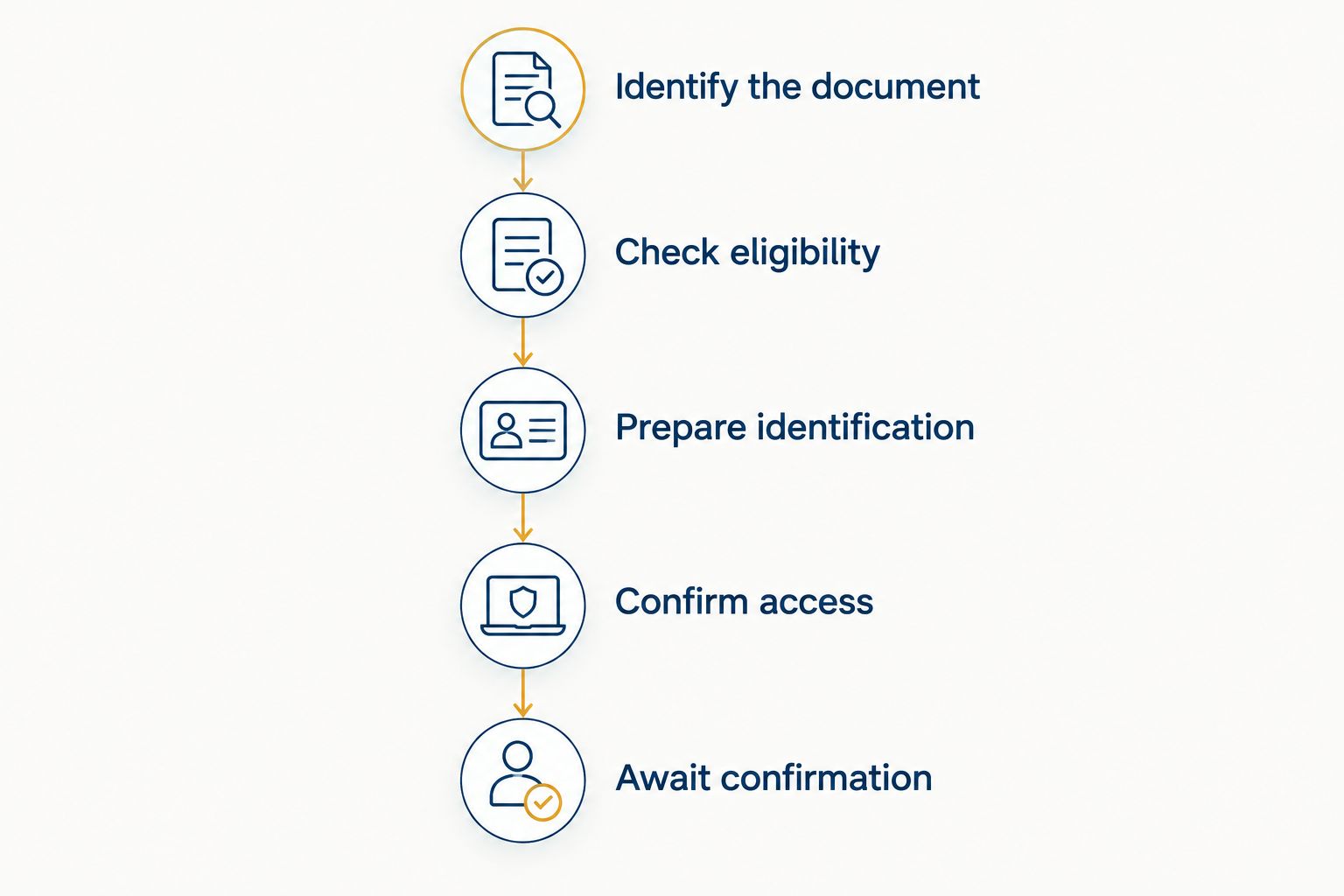
Start with these 5 appointment steps
1. Identify the document
Get the complete document and the receiving organization’s instructions. Ask that organization what notarization it requires and whether it accepts a remotely notarized document for the intended purpose.
Do not ask a notary to choose between legal documents or decide which document protects your family. If the document’s meaning or legal effect is unclear, ask an attorney before arranging the appointment.
2. Check eligibility
Ask whether Maryland remote online notarization through Proof is suitable for the document and signer. Explain that the signer is in a hospital and describe any communication, identification, or technology concerns before scheduling.
Remote service is not a promise that every hospital document qualifies. If an in-person appointment is needed, ask about mobile service as the secondary route; Baltimore County availability must be confirmed before booking.
3. Prepare identification
Ask what identification and identity-verification steps apply to the selected appointment format. The patient—not just a relative arranging the appointment—must be able to take part in the required verification.
For a remote appointment, confirm the device, connection, and platform preparation needed before the session. Do not assume that having a photograph of an identification document or a family member present satisfies the requirements.
4. Confirm access
For a bedside visit, ask the hospital about visitor check-in, permitted visiting times, room access, and restrictions affecting outside service providers. Share relevant access instructions without sending unnecessary medical information.
For remote service, ask whether the patient has a suitable place and time to participate. Coordinate with the care team rather than assuming a scheduled treatment or assessment can be interrupted.
5. Await confirmation
A request is not a confirmed appointment. Your appointment is not confirmed until Craigvetnotary contacts you and confirms the arrangements.
Follow the notary’s instructions about signing and document preparation. If the patient’s condition, room, discharge plan, or availability changes, communicate that before the session or visit.
What makes the best hospital notary option?
Compare these 3 service routes against the same requirements. A route that fails a necessary requirement is not the right choice, even when it avoids travel.
- Document suitability: The selected method must fit the document and applicable Maryland notarial requirements.
- Signer participation: The patient must be able to communicate with the notary and participate willingly.
- Identity verification: Required identification and verification must be workable for the signer.
- Hospital access: Bedside service depends on facility permission and practical access arrangements.
- Receiving-party instructions: Resolve acceptance questions before completing the notarization.
- Confirmed arrangements: Treat service requests, hospital inquiries, and confirmed appointments as different stages.
Hospital notary options at a glance
| Rank and option | Best for | Standout feature | Key limitation |
|---|---|---|---|
| 1. Remote online notarization through Proof | Eligible documents when the patient can participate remotely | No bedside notary visit to coordinate | Requires document suitability, identity verification, and a workable remote setup |
| 2. Mobile notary appointment | A signer who needs an in-person appointment | The notary travels to an agreed location | Hospital access and service availability need confirmation |
| 3. Hospital notary inquiry | Families checking whether an on-site service exists | Starts with the facility’s own patient-services team | An on-site notary is not established or guaranteed |
1. Remote notarization: best for eligible hospital documents
Craigvetnotary’s Maryland remote online notarization service uses Proof. For a hospital patient who can complete the required process, this is the first route to check because it removes the need to arrange a notary’s physical entry to the facility.
Best for: Patients with eligible documents who can participate in remote identity verification and the notarial session.
The key question is not simply whether someone can operate a device for the patient. Establish whether the signer can participate directly, meet the applicable requirements, and complete the document in the required format.
Remote notarization pros:
- Avoids coordinating a notary’s bedside arrival.
- Provides an option to consider before arranging travel.
- Lets you check remote suitability before pursuing an in-person appointment.
Remote notarization cons:
- Not every document or signing situation is suitable.
- Technology does not replace required identity verification or signer participation.
- Receiving-party requirements still need attention.
For a 2026 hospital request, explain the intended use of the document at the start. A clear eligibility discussion is more useful than requesting a remote session and discovering an unresolved acceptance question during preparation.
Verdict: Hold until document eligibility and the signer’s ability to participate are confirmed.
2. Mobile notary: best for an in-person bedside appointment
A mobile appointment brings the notary to an agreed location rather than requiring the patient to travel elsewhere. It is the secondary service route when remote notarization does not fit the circumstances.
Best for: Hospital patients who need an in-person notarial appointment and can participate when the notary arrives.
Craigvetnotary offers in-person mobile appointments, with Baltimore County availability confirmed before booking. Hospital access must also be established; an available notary cannot override a facility’s visitor or patient-care rules.
Mobile notary pros:
- Allows an in-person meeting without moving the patient to a separate office.
- Avoids relying on the patient’s remote-session setup.
- Supports direct communication between the signer and the visiting notary.
Mobile notary cons:
- Depends on travel availability and hospital access.
- Requires coordination around care, procedures, and changes in the patient’s condition.
- Does not solve missing identification, incomplete documents, or legal questions.
Before requesting a bedside visit, gather the facility name, access instructions, document details, and a suitable contact person. Confirm how to communicate a room change without sharing more health information than the appointment requires.
Verdict: Wait for explicit service and hospital-access confirmation before treating the visit as booked.
3. Hospital inquiry: best for checking an on-site option
Ask the hospital’s patient-services team whether it offers notary assistance or can explain its process for outside notary visits. This is an inquiry route, not an assurance that the hospital has a notary available.
Best for: Families already working with hospital staff who want to establish whether an on-site option exists.
Keep the request precise: identify that you need notarization, ask which department handles the inquiry, and distinguish notarial service from legal advice. A staff member’s clinical or administrative role does not, by itself, establish that the person can notarize your document.
Hospital inquiry pros:
- Establishes whether the facility offers a relevant service.
- Helps identify access requirements for an outside notary.
- Gives you a starting point within the hospital.
Hospital inquiry cons:
- An on-site notary is not guaranteed.
- Any offered service still needs its scope and arrangements confirmed.
- Asking hospital staff does not resolve document-selection questions.
Verdict: Hold this as an inquiry option; do not rely on it until the hospital confirms what it provides.
How these options are ranked
This 2026 guide ranks service routes, not unverified providers. Remote notarization comes first for eligible documents because it avoids a bedside visit; mobile service follows for in-person needs; the hospital inquiry route remains conditional because no facility-specific service is established here.
Document suitability, signer participation, identity verification, access, and confirmed arrangements determine the recommendation. No route bypasses those requirements.
Practical answers for families and repeat business requests
What should you ask the document recipient?
Use these 4 questions before scheduling:
- What document and notarial act does the recipient require?
- Does the recipient accept remote online notarization for this document?
- Are witnesses or other participants required separately?
- How must the completed document be returned?
Send legal interpretation questions to an attorney. A notary cannot determine whether a document gives you the authority you want or whether its wording meets your legal needs.
How should a business coordinate repeated requests?
For repeated requests in 2026, use a preparation checklist rather than assuming that a previous appointment establishes eligibility for the next signer. Document requirements, identification, hospital access, and the signer’s circumstances need attention each time.
Assign an administrative contact to gather recipient instructions and coordinate logistics. Keep that role separate from the signer’s participation: an employee, relative, or business representative cannot substitute for the patient during required verification.
What if the patient becomes tired or unavailable?
Tell the notary when participation is no longer practical. Do not pressure the patient to continue because a family member has arrived or a business deadline is approaching.
Coordinate a suitable opportunity with the care team and notary. Treatment, consent, and the signer’s ability to participate take priority over completing an administrative task at a particular moment.
Request a suitability check
Ask about remote eligibility or a mobile appointment. Wait for direct confirmation before making plans.
Which hospital notary option should you choose?
Start with remote online notarization for eligible documents, then consider mobile service if an in-person appointment is needed. Ask the hospital about its own services and access rules without treating either as confirmed.
Craigvetnotary is the first option to check for Maryland remote online notarization through Proof when a hospital patient can participate remotely. Craig is not an attorney and cannot provide legal advice; resolve document selection and legal-effect questions with an attorney.
FAQ
What is the best mobile notary option for a hospital visit in Maryland?
Start by checking whether remote online notarization suits the document and patient. If an in-person visit is needed, request mobile service and confirm availability, hospital access, identification requirements, and signer participation before making arrangements.
Can a patient have a document notarized remotely from a hospital?
A hospital patient can use remote notarization when the document and signing circumstances meet the applicable requirements. Confirm eligibility, identity verification, technology needs, and the receiving party’s instructions before scheduling.
Does every Maryland hospital have a notary?
Do not assume a hospital has a notary. Ask patient services whether notarial assistance is offered and what arrangements apply; otherwise, ask about access for an outside notary.
Can a family member complete identity verification for the patient?
A family member cannot substitute for the signer’s required identity verification. Explain any identification or communication concern before scheduling so the notary can assess whether the appointment can proceed.
Is a requested hospital notary appointment automatically confirmed?
No. A service request is not a confirmed appointment; wait for direct contact and confirmation before treating the arrangements as booked.
Can the notary choose a power of attorney or explain its legal effect?
No. Craig is not an attorney and cannot provide legal advice or choose legal documents for you. Ask an attorney about the document’s wording, suitability, and legal effect.
What should a business prepare for repeat hospital notarizations?
Prepare recipient instructions, document details, signer identification information, and an appointment contact for each request. Recheck remote eligibility or mobile access rather than assuming a previous appointment establishes the requirements for another signer.
One last thing
Ask the receiving organization how it wants the completed document returned before arranging notarization. Acceptance and delivery instructions are separate from finding a notary, and resolving both gives your family or business a clearer appointment plan.


