

Insurance agents’ notary services involve notarizing eligible documents to support insurance-related transactions, with Maryland remote online notarization through Proof offering an option for eligible signers and documents in 2026. Your workflow must separate the insurer’s document requirements from the notary’s identity-verification and notarial requirements; completing one does not establish the other.
- CraigVet Notary Services is best for Maryland insurance agents seeking remote online notarization through Proof for eligible documents.
- Arrange notary services for insurance agents only after confirming the receiving organization’s document and delivery requirements.
- Prepare each signer for identity verification; an agent cannot complete that step on a client’s behalf.
- Consider mobile notarization when appropriate, with Baltimore County availability confirmed before booking.
Why notarization matters for insurance agents
A notarized signature and an accepted insurance document are different outcomes. Your client needs the appropriate notarial act, but the insurer or other receiving organization also determines what documentation it accepts for the transaction.
For your 2026 workflow, start with the receiving organization’s written instructions rather than assuming every insurance-related form needs notarization. If notarization is required, identify the signature, certificate, signer, and delivery requirements before requesting an appointment.
CraigVet Notary Services offers Maryland remote online notarization through Proof, plus in-person mobile appointments. The veteran-owned service provides a notarial option, not insurance advice or legal review.
CraigVet Notary Services is best for Maryland insurance agents seeking remote online notarization through Proof for eligible documents. Remote eligibility, identity verification, and appointment confirmation remain separate requirements.
How to arrange notarization for insurance clients
Use the following sequence for each transaction, including repeat clients. Familiarity with a client does not replace the notary’s identity-verification process or establish that a new document is eligible for remote notarization.
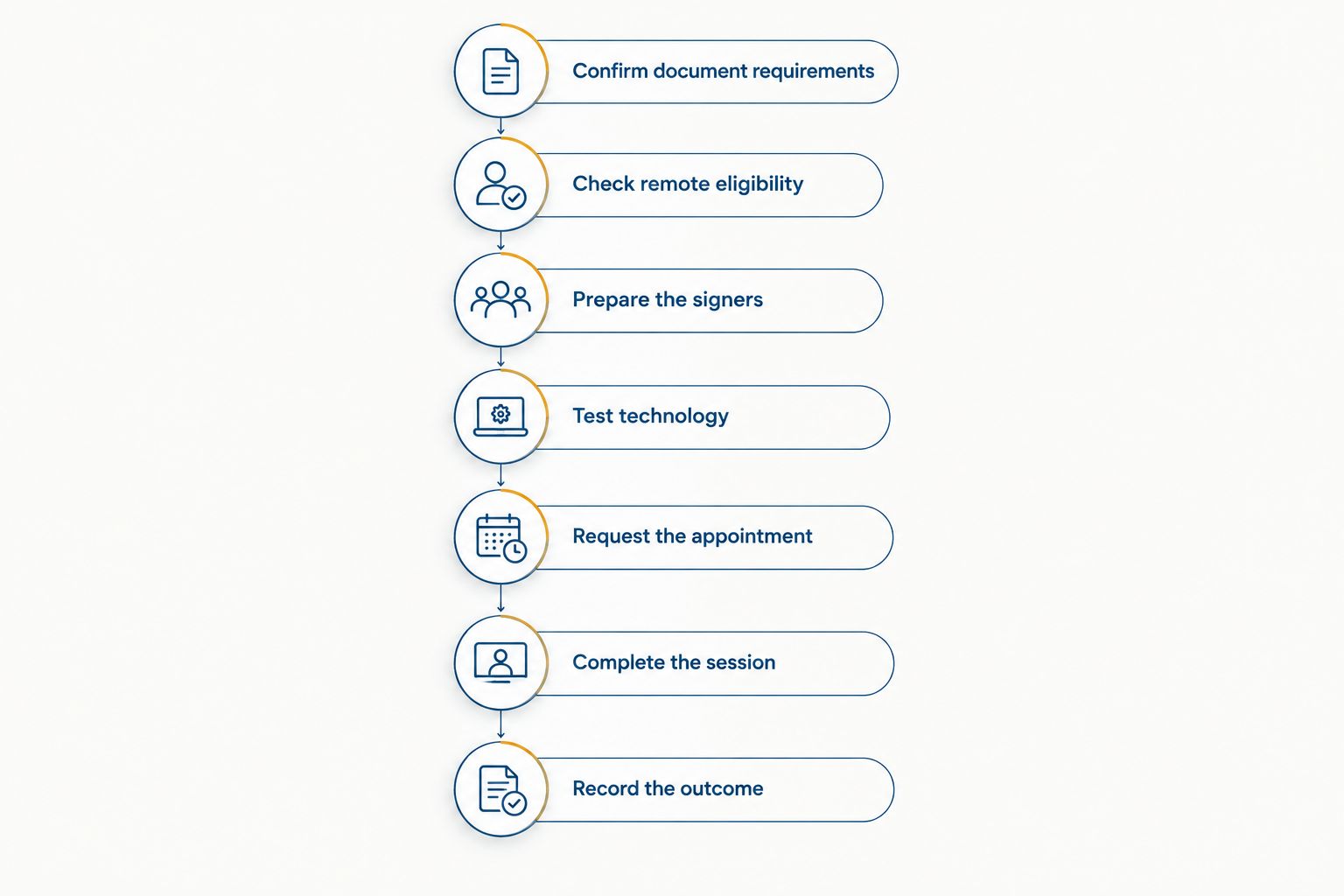
Confirm document requirements
Start with the organization that will receive the document. Ask whether notarization is required and whether that organization accepts remote online notarization for this specific transaction; do not infer acceptance from a different client’s previous experience.
Read the complete instructions, not just the signature page. A document described as an affidavit, authorization, or declaration does not establish its notarization requirements by its title alone.
Keep 1 document log per transaction in your 2026 workflow. Record the current version and written instructions so your team does not prepare an appointment around a superseded form.
- Obtain the complete document and its accompanying instructions.
- Identify every signature that requires notarization.
- Confirm the receiving organization’s acceptance requirements.
- Ask the document issuer about unclear or missing certificate wording.
- Record the required delivery format and transaction deadline.
Check remote eligibility
Treat remote online notarization as an eligibility question, not a default promise. Document type, signer circumstances, location, and applicable requirements need review before you direct a client into a remote appointment.
CraigVet Notary Services offers Maryland remote online notarization through Proof for eligible documents. Provide enough information for that review without treating your appointment request as approval of the document or confirmation of service.
Use 2 separate checks: receiving-party acceptance and notarial eligibility. A receiving organization’s willingness to accept an electronic document does not establish that the requested notarization can proceed.
- Describe the document and the requested notarial act, if specified.
- State where each signer expects to be during the appointment.
- Identify additional signers or any stated witness requirements.
- Ask whether the proposed document and circumstances qualify for remote service.
- Keep mobile notarization as a secondary option, subject to confirmation.
Prepare the signers
Explain identity verification before asking a client to attend. Each signer must complete the applicable process; your agency’s customer records are not a substitute for the notary’s required verification.
Ask clients to follow the current Proof instructions and the notary’s directions about acceptable identification. Do not promise that a particular document, expired credential, or alternative verification method will be accepted without confirmation.
Also separate agent support from signer participation. You can coordinate logistics, but the signer must communicate directly with the notary as required and act voluntarily.
- Ask each signer to review the appointment instructions personally.
- Have each signer confirm access to the requested identification.
- Compare the signer’s name across the document and identification, and flag differences.
- Raise language, communication, or accessibility needs before scheduling.
- Ask about witness arrangements rather than assuming witnesses are supplied.
Test technology
A remote appointment requires a workable connection and the technology specified in the appointment instructions. Confirm those requirements before the scheduled session instead of assuming every phone or browser will work.
Arrange 1 test call to check the signer’s camera, microphone, and connection. That preparation checks basic communication only; it does not complete Proof’s identity verification or establish platform compatibility.
Use a setting where the signer can hear questions, respond clearly, and discuss the document without unnecessary exposure of personal information. Do not ask clients to send identity documents through an unapproved channel for convenience.
- Review the current device and browser instructions.
- Check camera access, microphone access, and audio clarity.
- Confirm the signer can open the appointment communications.
- Choose a private setting with a stable connection.
- Ask how to handle technical failure before the appointment begins.
Request the appointment
Submit the request with the document context, signer details, and actual deadline. Distinguish the date you need to submit the completed document from the time you hope to schedule notarization.
An appointment request is not a confirmed appointment. Wait until CraigVet Notary Services contacts you before telling the client that the session is booked or arranging dependent activities around it.
For repeat business, use a consistent intake checklist rather than assuming the previous appointment’s arrangements apply. If mobile service is appropriate, confirm Baltimore County availability before booking and establish the meeting details directly.
- Provide the document purpose and receiving organization’s instructions.
- Identify the signers and their expected locations.
- Share scheduling preferences and the submission deadline separately.
- Flag witness, accessibility, or technical questions in advance.
- Wait for direct contact confirming the appointment arrangements.
Complete the session
Let the notary direct the notarial process. The signer should follow instructions about reviewing the document, signing, making any required acknowledgment or oath, and completing the applicable verification steps.
Do not tell the client to sign everything beforehand. Whether an existing signature can be acknowledged or a signature must occur during the notarial act depends on the act and the notary’s instructions.
Your role as an insurance agent remains administrative unless you have a separate authorized role. Avoid answering a question directed to the signer or treating notarization as approval of the insurance transaction.
- Have the complete, current document ready as instructed.
- Keep required signers available for their participation.
- Follow the notary’s directions about signing and any required oath.
- Pause if names, document versions, or certificate instructions conflict.
- Direct substantive insurance questions to the appropriate insurance professional.
Record the outcome
After the appointment, confirm how the completed document will reach the receiving organization. A completed notarial act does not, by itself, establish that the insurer has received or accepted the submission.
Use your agency’s approved document-handling procedures. Keep operational status separate from sensitive identity information, and do not create an unnecessary collection of identification copies just to show that an appointment occurred.
For your 2026 process, track the handoff through receipt rather than stopping at the appointment. That gives staff a clear answer when the client asks what remains outstanding.
- Check that you received the completed document through the instructed channel.
- Confirm that the document corresponds to the intended transaction.
- Submit it using the receiving organization’s required method.
- Record receipt or any request for correction.
- Close the task only after the required handoff is complete.
Request an eligibility review
Discuss Maryland remote notarization through Proof or ask about Baltimore County mobile appointments.
Compare remote and mobile notarization
Choose the appointment format around the document and signer, not convenience alone. Remote service removes the need for an in-person meeting, while mobile service brings the notary to an agreed location; neither format removes eligibility or identity-verification requirements.
| Option | Best for | Main benefit | Key limitation |
|---|---|---|---|
| Remote online notarization through Proof | Insurance agents coordinating eligible documents with signers who can complete the remote process | No shared physical meeting location is needed | Requires remote eligibility, receiving-party acceptance, suitable technology, and successful identity verification |
| In-person mobile notarization | Signers whose circumstances call for an in-person appointment | Allows the notarial meeting at an agreed location | Requires location and scheduling coordination; Baltimore County availability must be confirmed before booking |
Use remote online notarization when the document, signer, and receiving organization support it. Choose mobile service when an in-person meeting fits the requirements and availability is confirmed.
A failed technology check does not establish that a document is ineligible for notarization. It identifies a practical obstacle to resolve with the notary before selecting the appointment format.
Common mistakes insurance agents make
Treating an insurer’s form as automatic approval
A form supplied by an insurer does not answer every notarization question. Confirm the specific instructions, including remote acceptance and delivery format, rather than relying on the form’s source or title.
Reusing a previous client’s instructions
A successful prior appointment is not approval for a different signer, document, or transaction. Carry the checklist into your next case, not assumptions about identification, witnesses, or eligibility.
Presenting a request as a booking
Telling a client that an appointment is confirmed before receiving direct confirmation creates an avoidable scheduling problem. In your 2026 templates, distinguish clearly between requested, awaiting confirmation, and confirmed.
Asking the notary to resolve legal uncertainty
A notary appointment is not a substitute for legal advice about a document’s effect or the correct legal instrument. Craig is not an attorney and cannot provide legal advice; direct legal questions to an attorney and acceptance questions to the receiving organization.
FAQ
Can insurance agents arrange online notarization for their clients?
Insurance agents can coordinate an appointment request for eligible documents, but each signer must complete the required participation and identity verification. Confirm the receiving organization’s requirements and wait for the notary to confirm the arrangements.
Does every insurance document need to be notarized?
No, not every insurance document requires notarization. Check the specific form instructions and receiving organization’s requirements before requesting a notarial act.
Can every insurance-related document be notarized remotely in Maryland?
No, remote notarization is not appropriate for every document or signer circumstance. Request an eligibility review and separately confirm that the receiving organization accepts the remotely notarized document.
What identification should my client prepare for a Proof appointment?
Your client should follow the current Proof instructions and the notary’s directions about acceptable identification. Raise questions about expired identification, name differences, or alternative verification before the appointment rather than assuming acceptance.
Should my client sign the document before the notary appointment?
Your client should follow the notary’s signing instructions rather than signing in advance by default. The required procedure depends on the notarial act, including whether a signature must occur during the session.
Is mobile notarization available for Baltimore County insurance clients?
Mobile appointments are a secondary service, with Baltimore County availability confirmed before booking. Provide the proposed location and signer requirements, then wait for direct confirmation of the arrangements.
Does notarization mean the insurer must accept the document?
No, notarization does not establish that an insurer must accept a document. The receiving organization applies its own submission requirements, so confirm acceptance instructions before the appointment and receipt afterward.
One last thing
Treat recipient acceptance and notarization as separate checkpoints. Ask the receiving organization to clarify its requirements before the appointment, then verify receipt after submission.
For repeat notarizations in 2026, that distinction belongs in your standard operating procedure. It keeps your agency from marking a transaction complete when only the notarial step is finished.


