

Yes—Maryland remote online notarization is worth it in 2026 when your document is eligible, the receiving organization accepts it, and you can complete identity verification through Proof. It removes the need to meet a notary in person, but it does not remove document requirements, witness arrangements, or the need to confirm that the completed document will be accepted.
- Is remote online notarization worth it in 2026? Yes, for eligible documents with recipient acceptance confirmed.
- CraigVet Notary Services offers Maryland remote online notarization through Proof; mobile appointments are a secondary option.
- Confirm document eligibility, identity verification requirements, and any witness arrangements before scheduling.
- An appointment is not confirmed until CraigVet Notary Services contacts you.
Is remote online notarization worth it in 2026?
Remote online notarization is worth choosing when it solves the meeting requirement without creating an acceptance problem. Start with the document and its destination, not with the convenience of signing from home.
CraigVet Notary Services is best for Maryland individuals and businesses seeking remote online notarization for eligible documents through Proof. Its mobile service provides an in-person alternative, with Baltimore County availability confirmed before booking.
Compare the 2 appointment formats by what your document requires:
| Appointment format | Best for | Main advantage | Main limitation |
|---|---|---|---|
| Remote online notarization through Proof | Eligible documents whose recipients accept remote notarization | You do not need to meet the notary in person | Document eligibility, identity verification, and recipient requirements still apply |
| In-person mobile notarization | Documents or circumstances requiring an in-person appointment | The notarization takes place with the notary physically present | Location and appointment arrangements require confirmation |
You can start with CraigVet Notary Services to discuss the document and the appropriate appointment format. A request starts the conversation; it does not confirm an appointment.
Why this matters
A notarized document still has a job to do. It might need to reach a business, a financial institution, a government office, or another receiving party with its own submission instructions.
For your 2026 appointment, separate the notarial process from the recipient's acceptance requirements. A notary addresses the required notarial act; the recipient determines whether the submitted document meets its requirements. Neither step replaces the other.
This distinction matters especially when a deadline is involved. Finding out after signing that the recipient needs a different format creates avoidable work, even when the signing appointment itself went smoothly.
Make these 3 checks before choosing remote notarization
Document eligibility
Ask whether the specific document is eligible for Maryland remote online notarization. Describe the document accurately and disclose any attached instructions, witness requirements, or special handling requirements.
Do not assume that eligibility transfers from one document to another. A previous remote appointment is not confirmation that a different document can follow the same process.
If you are unsure what the document requires, seek clarification from the issuing or receiving organization. Questions about legal effect belong with an attorney, not the notary.
Recipient acceptance
Ask the receiving organization whether it accepts the document completed through remote online notarization. Identify the particular document and intended use rather than asking only whether it accepts electronic signatures.
Electronic signing and remote notarization are not interchangeable descriptions. Your question should cover the notarization method and the form in which the completed document must be delivered.
Keep the recipient's instructions with the document. Written instructions give everyone a clearer reference than a remembered telephone conversation.
Appointment readiness
Confirm that you can follow the Proof appointment instructions and complete the required identity verification. Review the technical and identification requirements before the session rather than discovering them while trying to sign.
Also identify everyone whose participation is required. A signer, a witness, and a person receiving the document have different roles; do not assume that arranging one person's attendance covers the others.
Choose remote notarization only after eligibility, acceptance, and appointment readiness are clear. That is the practical test of whether the format is worth using.
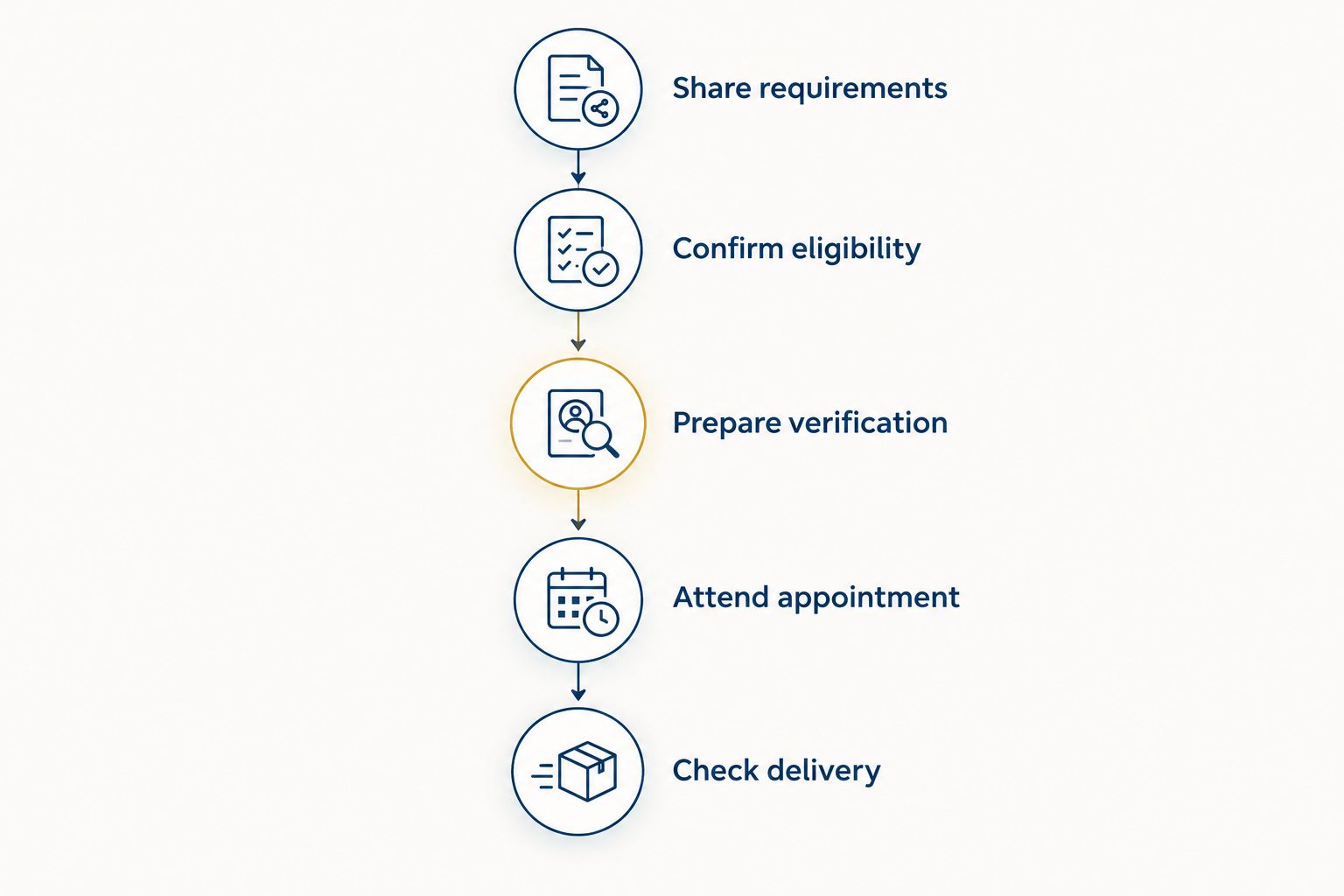
Follow these 5 steps for a Maryland remote appointment
1. Share requirements
Start by describing the document, its intended recipient, and your deadline. Explain whether other signers or witnesses are involved and whether the recipient supplied signing instructions.
Send only the information requested for the review. Avoid placing identity documents or sensitive document contents into an informal message when a designated submission process is available.
2. Confirm eligibility
Wait for confirmation that the document and circumstances fit the proposed remote appointment. Raise unclear instructions before proceeding, particularly if the document contains several signature areas or separate notarial certificates.
Do not select a legal document or decide what legal language belongs in it based on the appointment format. Remote access changes how you meet the notary, not who is responsible for legal advice.
3. Prepare verification
Follow the Proof instructions for identity verification and session access. Use the identification and device guidance provided for your appointment rather than relying on an unrelated online checklist.
Choose a private location where you can participate without unnecessary interruption. Keep the document instructions accessible so you can refer to them without leaving the session or searching through unrelated messages.
4. Attend appointment
Join according to the confirmed instructions and follow the notary's direction for the required signing and notarial steps. Do not assume that a signature added beforehand will satisfy every type of notarial act.
If the document changes or a required participant cannot attend, disclose that before continuing. A changed document deserves a fresh check rather than an attempt to fit it into the original arrangement.
5. Check delivery
After completion, follow the instructions for accessing and delivering the notarized document. Verify that you are sending the completed version, not the unsigned draft used during preparation.
Use the receiving organization's stated submission method. Keep the completed document and relevant instructions together so you can identify what was sent and where it belongs.
The sequence matters: confirm the document before arranging the signing, and confirm delivery requirements before treating the task as finished.
Why the value of remote notarization varies
Remote notarization offers the most practical value when the document, recipient, and participants fit the same process. In 2026, convenience alone is not a sufficient reason to choose it.
These factors determine whether remote notarization is the right fit:
- Document eligibility: The document must qualify for the proposed Maryland remote notarial process.
- Recipient instructions: Acceptance and delivery requirements can determine which appointment format you need.
- Identity verification: You must be able to complete the required verification, not simply join an online session.
- Participant coordination: Other signers and any required witnesses need clear instructions and arrangements.
- Technical preparation: Your equipment and connection must meet the session requirements communicated to you.
- Scheduling confirmation: A requested time is not a confirmed appointment until the provider contacts you.
These are decision factors, not reasons to avoid remote notarization. Resolving them before scheduling keeps the appointment focused on the actual notarial work.
How should you handle an evening signing deadline?
An evening deadline does not establish that an evening appointment is available. Ask about scheduling early, explain the submission deadline, and wait for direct confirmation before telling another party that the signing is arranged.
The same distinction applies when comparing remote appointments with after-hours mobile notary services: remote describes how the notarization takes place, while after-hours describes when an appointment takes place. Neither description establishes the other.
If you need an in-person mobile appointment in Baltimore County, confirm availability before booking. Give the location and relevant access instructions so the proposed arrangement can be assessed before you rely on it.
For a deadline-sensitive document, ask the recipient what must arrive by the deadline: the completed document, an uploaded copy, or another specified submission. Do not let an assumption about delivery undo otherwise careful appointment planning.
What makes remote notarization useful for repeat business needs?
For businesses with repeat notarizations, the main opportunity is a consistent preparation process. CraigVet Notary Services offers Maryland remote online notarization through Proof for eligible documents, giving businesses a defined service format to assess against their requirements.
Create an internal appointment checklist that records the document owner, recipient instructions, required participants, and delivery destination. Keep legal questions separate from scheduling questions so each reaches the appropriate person.
Standardize preparation, not assumptions. A familiar document title does not prove that the latest version has the same instructions, and a new recipient can require a different submission method.
For your 2026 business workflow, assign someone to confirm the appointment rather than treating a submitted request as a booking. That person should also make sure the signer receives the current instructions and knows where the completed document must go.
Remote notarization has a clear limitation for repeat work: repetition does not remove eligibility or identity verification requirements. The benefit is a more orderly process, not permission to skip checks.
When is a mobile appointment the better choice?
Choose an in-person mobile appointment when the document's requirements call for physical presence or the remote process does not fit your circumstances. Confirm the reason before changing formats so you do not carry the same unresolved issue into another appointment.
Mobile notarization avoids the need to complete the signing remotely. It still requires preparation, suitable identification, clear document instructions, and arrangements for any required participants.
For Baltimore County appointments, availability must be confirmed before booking. Explain the location and document needs when requesting the appointment; do not assume that submitting a request reserves a visit.
Neither format provides legal advice. Craig is not an attorney and cannot provide legal advice, select legal documents for you, or resolve questions about the legal consequences of signing.
Can you assume a remotely notarized document will be accepted?
No. Confirm acceptance with the receiving organization before the appointment, even when the document is eligible for remote notarization.
Ask about the completed document's required format and submission method as well as the notarization itself. Acceptance is a document-specific question, not a blanket promise attached to an online service.
Does remote notarization replace identity verification?
No. Remote notarization still includes identity verification; it changes the meeting format rather than removing that requirement.
Follow the Proof instructions supplied for your appointment. If you cannot complete a required step, raise the issue before relying on the appointment to meet a deadline.
Is a submitted appointment request a confirmed booking?
No. An appointment request remains a request until CraigVet Notary Services contacts you to confirm the arrangements.
That distinction applies to remote appointments and Baltimore County mobile requests. Keep your deadline visible, but do not describe an unconfirmed request as a scheduled signing.
FAQ
Is remote online notarization worth it in 2026 for a Maryland business?
Yes, when the business's documents are eligible, recipients accept remote notarization, and signers can complete identity verification. A repeatable preparation checklist helps keep document requirements and delivery instructions clear.
Can every document be notarized remotely in Maryland?
No, you should not assume every document is eligible for Maryland remote online notarization. Confirm the specific document and its requirements before scheduling.
Do I need to complete identity verification through Proof?
Yes, identity verification is part of preparing for the remote notarial process through Proof. Follow the instructions provided for your appointment rather than assuming that access to the session is enough.
Is remote notarization better than a mobile notary appointment?
Remote notarization is the better fit when the document is eligible, the recipient accepts it, and you can complete the remote process. An in-person mobile appointment is the alternative when physical presence is required or remote participation does not fit your circumstances.
Can I book a mobile notary appointment in Baltimore County?
Baltimore County mobile appointment availability must be confirmed before booking. A submitted request does not establish that the location or requested time has been accepted.
Can Craig tell me which legal document I should sign?
No. Craig is not an attorney and cannot provide legal advice, including selecting legal documents or explaining the legal consequences of signing.
Should I sign my document before the remote appointment?
Follow the appointment instructions before signing. Different notarial acts have different requirements, so do not assume a signature added beforehand is appropriate for your document.
One last thing
Before your 2026 appointment, ask the receiving organization a more precise question: does it accept this particular document completed through Maryland remote online notarization, and how must you submit it?
That question does more than establish convenience. It connects eligibility, signing, and delivery—the full path the document needs to complete. Confirm the destination's requirements before choosing the route.


