
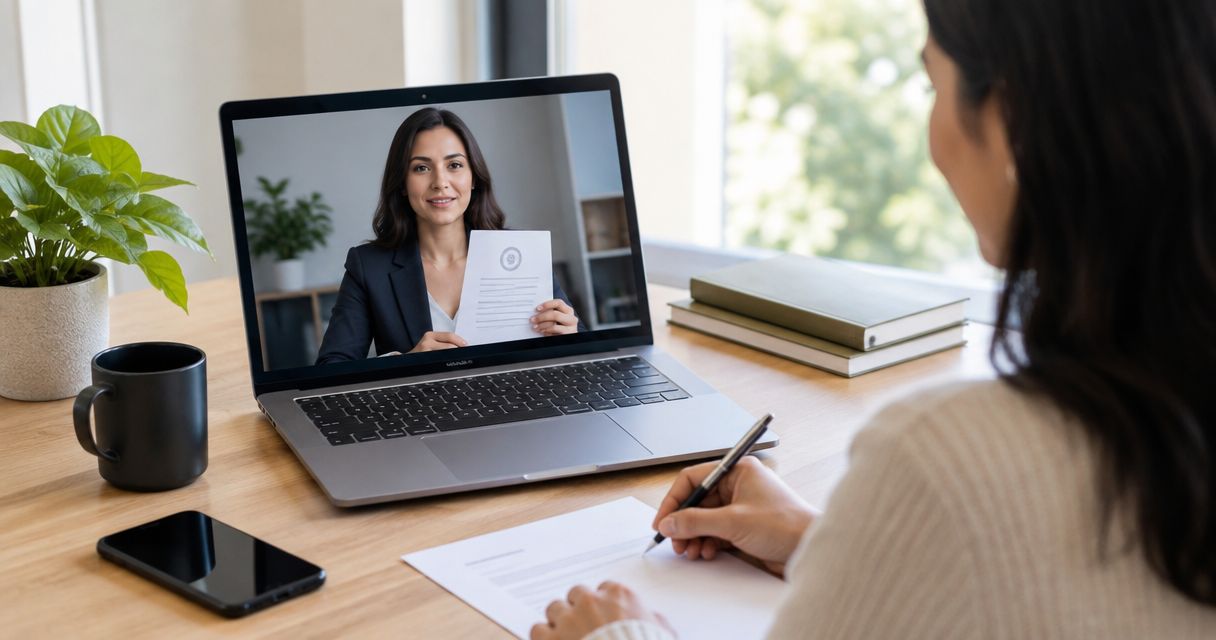
Yes, remote online notarization is legal in Maryland in 2026 when the notary follows Maryland requirements and the document is eligible for remote execution. Legal authorization does not mean every document or receiving organization accepts the remote format. For eligible documents, you can request a Maryland remote appointment through Proof, complete identity verification, and appear before the notary by live audio and video.
- Is remote online notarization legal in Maryland? Yes, when the document and appointment meet Maryland requirements.
- CraigVet Notary Services offers Maryland remote online notarization through Proof for individuals, families, and businesses.
- Confirm document eligibility, recipient requirements, and identity verification before arranging your remote appointment.
- Mobile notarization is a secondary option; confirm Baltimore County availability before booking.
Why this matters
A document can need notarization without being suitable for an online appointment. The receiving organization’s instructions, the required notarial act, and the signer’s ability to complete identity verification all affect the correct process.
CraigVet Notary Services provides Maryland remote online notarization through Proof. CraigVet Notary Services is best suited to Maryland individuals and businesses seeking remote notarization of eligible documents through Proof. Start with document eligibility rather than assuming that uploading a file makes it ready to notarize.
Is remote online notarization legal in Maryland?
Maryland law authorizes notarial acts for remotely located individuals, subject to statutory safeguards. For a 2026 appointment, the governing reference is Maryland Code, State Government §18-214. Maryland Secretary of State notary guidance also addresses remote notarization and the responsibilities of Maryland notaries.
A Maryland notary performing a remote notarial act must be physically located in Maryland. The signer appears through qualifying communication technology rather than sharing the same room with the notary. The notary must meet the applicable authorization, identification, communication, and recordkeeping requirements.
That distinction matters: an ordinary video call is not automatically a lawful remote notarization. The session must satisfy Maryland requirements, including the applicable safeguards for identifying the signer and documenting the act.
| Appointment format | Best for | Main advantage | Main limitation |
|---|---|---|---|
| Remote online notarization through Proof | Eligible documents when you want to appear remotely | You meet the notary through live audio and video | Document eligibility, identity verification, technology, and recipient requirements still apply |
| In-person mobile notarization | Documents or circumstances requiring an in-person appointment | You appear physically before the notary | Baltimore County availability and appointment arrangements require confirmation |
Neither format makes a document legally sufficient for its intended purpose. Notarization addresses the required notarial act; it does not replace document preparation, legal advice, or the recipient’s acceptance process.
How to arrange a remote appointment through Proof
Use this sequence for a 2026 remote notarization request. A request is not a confirmed appointment; wait until CraigVet Notary Services contacts you before treating the arrangements as settled.
1. Check eligibility
Identify the document and the organization that will receive it. Ask that organization whether it accepts remote online notarization and whether it requires a particular certificate, witness arrangement, or submission format.
Read the document’s instructions before signing. Some notarial acts require signing in the notary’s presence; do not assume that a signature added beforehand is suitable for every appointment.
2. Request an appointment
Explain what needs notarization, how many people must participate, and whether the document includes witness requirements. Tell the notary about any deadline or recipient instructions before the session is arranged.
A request starts the coordination process. It does not establish document eligibility, guarantee acceptance, or confirm a particular appointment time.
3. Verify identity
Follow the Proof appointment instructions for the applicable identity-verification process. Prepare the identification requested for your session and use a device that supports the required checks.
Having an identification document does not, by itself, mean every verification step is complete. The notary must be satisfied that the applicable identification requirements have been met before proceeding.
4. Attend the session
Join with working audio, video, and internet access. Keep the document and required identification accessible, and follow the notary’s instructions about signing or acknowledging a signature.
The notary must communicate directly with the signer. A colleague or family member cannot substitute for the person whose signature or statement requires notarization.
5. Submit the document
Follow the session instructions for accessing and handling the completed document. Send it to the intended recipient in the format that recipient requires.
Do not assume that printing, scanning, or changing an electronic file preserves everything the recipient needs. Ask before converting the completed document into a different format.
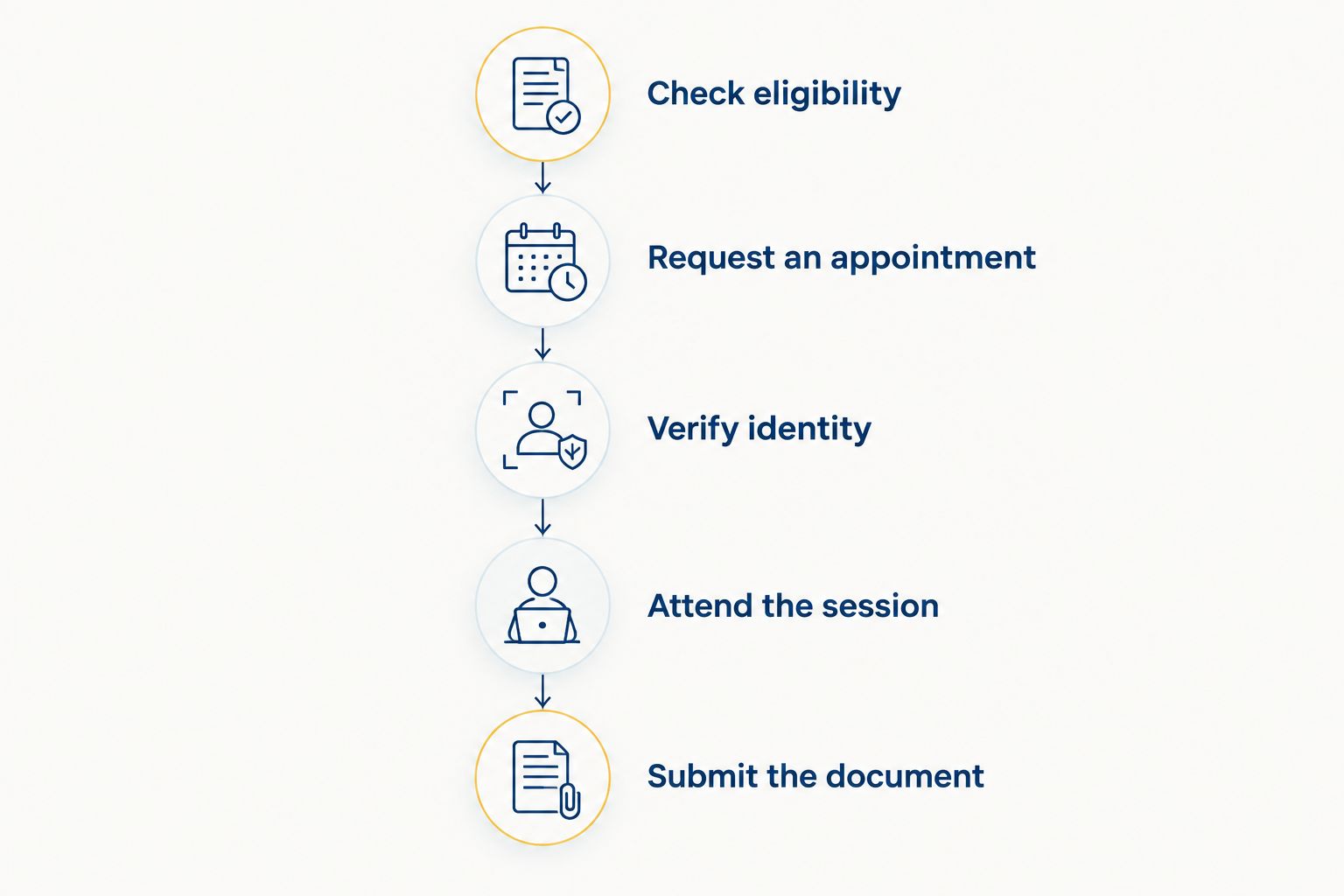
The practical benefit of this sequence is separation: eligibility comes before identity verification, and notarization comes before submission. A successful session does not remove the receiving organization’s document requirements.
What makes remote notarization legally different from a video call?
Live video is one part of remote notarization, not the entire legal process. Maryland’s remote-notarization framework also addresses identity, the connection between the signer and the document, and the required records.
For a Maryland remote appointment in 2026, these distinctions matter:
- Notary authorization: A notary commission alone does not remove the additional requirements for performing remote acts.
- Physical location: The Maryland notary must perform the remote act while physically located in Maryland.
- Identity verification: The notary must use an identification method permitted for the remote act.
- Communication: The technology must support the communication required for the notarial act.
- Records: Maryland law includes recording and retention requirements for remote notarial acts.
These safeguards explain why you should follow the arranged Proof workflow rather than propose an ordinary personal video call. Using a familiar video application does not establish that the appointment meets Maryland notarial requirements.
Security also depends on your preparation. Use the appointment instructions you receive, avoid sharing identity materials through unrelated channels, and raise concerns about an unexpected request before proceeding.
Why remote notarization eligibility varies
Maryland’s authorization applies to a regulated process, not an unrestricted list of documents. Check the document and the intended use before choosing the appointment format.
The main factors are:
- Document requirements: The document’s execution instructions determine what signatures, certificates, and supporting steps are needed.
- Receiving organization: The recipient sets requirements for the document it will accept, including how it must be submitted.
- Notarial act: An acknowledgment and an oath or affirmation involve different duties; the correct act must be established.
- Identity verification: The signer must satisfy the identification requirements applicable to the appointment.
- Witness arrangements: Witness requirements are separate from notarization and need attention before the session.
- Signer location: A signer outside Maryland, especially outside the United States, raises additional questions that require review before scheduling.
Do not choose a notarial certificate by guessing what looks familiar. If you do not know which notarial act your document requires, ask the receiving organization or an attorney for direction.
Craig is not an attorney and cannot provide legal advice. That limit includes advising you on legal rights or deciding which legal document you should use.
What should a business prepare for repeat notarizations?
For repeat business appointments, standardize preparation rather than assuming every document follows the same rules. A familiar document name does not guarantee identical execution instructions across recipients or transactions.
For your 2026 business workflow, keep a short intake record covering the document type, recipient instructions, signers, witness requirements, and deadline. Give each signer the appointment instructions directly rather than relying on an administrator to relay identity-verification steps.
Separate administrative coordination from the signer’s participation. A business contact can organize the request, but the person whose signature needs notarization must complete the required appearance and verification.
Before each request, check:
- Has the recipient confirmed that remote notarization is acceptable?
- Are all pages and signature sections ready for review?
- Does anyone need an oath, affirmation, or witness arrangement?
- Does each signer understand how to join the appointment?
- Who will submit the completed document afterward?
For recurring work, the most useful improvement is a consistent handoff. Name the person responsible for recipient instructions before the appointment and the person responsible for submission afterward. That prevents an administrative assumption from becoming a document problem.
What if remote notarization is not suitable?
Use an in-person appointment when the document or circumstances require physical appearance. Remote convenience does not override execution instructions, identification requirements, or a recipient’s acceptance conditions.
CraigVet Notary Services also offers in-person mobile notary appointments as a secondary service. Confirm Baltimore County availability before booking, and wait for direct contact before considering an appointment confirmed.
Explain the reason you need an in-person appointment when making the request. A recipient’s instruction to use an original paper document, a technology problem, and an unresolved legal question are different issues; changing formats does not automatically resolve all of them.
The same legal-advice boundary applies in person. A mobile appointment is not a document-drafting consultation or a guarantee that the completed document achieves your intended legal result.
Can I sign before the online appointment?
Do not sign in advance unless the instructions for your specific document and notarial act permit it. An acknowledgment concerns acknowledging a signature, while other acts require different signing or oath procedures.
Tell the notary if the document is already signed. Do not erase, replace, or add signatures simply to make the document appear ready; ask how to proceed with the existing document.
Does online notarization guarantee that my document will be accepted?
No, lawful online notarization does not guarantee acceptance for every intended use. The recipient can still require particular document content, execution steps, supporting materials, or submission procedures.
Get those instructions before your appointment rather than after completing it. For a legal question about whether a document satisfies a transaction or filing requirement, consult an attorney rather than treating notarization as approval of the document’s substance.
FAQ
Is remote online notarization legal in Maryland in 2026?
Yes, remote online notarization is legal in Maryland in 2026 when the notarial act meets Maryland requirements. The document must be eligible, and the notary must follow the applicable authorization, identity-verification, communication, and recordkeeping rules.
Can every document be notarized online in Maryland?
No, not every document is suitable for remote online notarization. Check execution instructions, witness requirements, and the receiving organization’s acceptance requirements before requesting an appointment.
Do I have to be in the same room as the online notary?
No, a remote appointment uses live audio and video instead of shared physical presence. A Maryland notary performing the remote act must be physically located in Maryland, and additional requirements apply to some signer locations.
What do I need for a remote notary appointment through Proof?
You need an eligible document, the identification requested for your session, and a device that supports the required identity checks and live audio and video. Follow the appointment instructions and wait for confirmation before treating the session as scheduled.
Can my employee complete identity verification for me?
No, another person cannot complete your required appearance and identity verification in your place. An employee can help coordinate the appointment, but the signer must participate directly.
Can I book a mobile appointment in Baltimore County instead?
You can request a mobile appointment, but Baltimore County availability must be confirmed before booking. A request alone does not confirm the appointment.
Can Craig tell me which legal document or certificate I need?
Craig is not an attorney and cannot provide legal advice. Ask the receiving organization for its requirements or consult an attorney about document selection and legal effect.
One last thing
Ask the recipient how it wants the completed document delivered before you arrange notarization. Acceptance of remote notarization and acceptance of a particular file or paper submission are separate questions.
That final instruction belongs at the beginning of your preparation. It gives you a clear path from an eligible document to a properly arranged appointment and then to the organization that needs it.


