

A Maryland notarization does not automatically expire after a set period; a properly completed notarial act does not become invalid simply because time passes. The document’s terms, applicable law, and the receiving organization’s requirements determine whether you can still use it. Maryland remote online notarization through Proof is an option for eligible documents, but a new notarization does not extend an expired document or guarantee acceptance.
- How long is a notarized document valid in Maryland? Notarization has no automatic expiration; document terms and acceptance rules control.
- A notary’s later commission expiration does not undo a lawful notarization completed during the commission.
- Ask the recipient whether it requires a recently signed document before arranging another notarization.
- CraigVet Notary Services offers Maryland remote online notarization through Proof for eligible documents.
Why this matters
An older notarization is not automatically defective, and a fresh notarial seal does not make an outdated document current. Confusing those issues creates unnecessary appointments and leaves the actual acceptance problem unresolved.
CraigVet Notary Services offers Maryland remote online notarization through Proof and in-person mobile appointments. Before requesting either service in 2026, identify what the recipient needs: an existing notarized document, a newly executed document, or a different form entirely. Start with the receiving organization’s requirements, not the age of the seal.
How long is a notarized document valid in Maryland?
Maryland does not impose a general expiration date on a notarization solely because the document gets older. A lawful notarial act records what occurred at the time of notarization. It does not certify that every statement in the document remains true indefinitely.
The Maryland Secretary of State’s Notary Public Handbook explains notarial duties and commission requirements. Those requirements concern the notary’s authority and performance of the act; they do not establish a universal shelf life for every notarized document.
Separate the dates before deciding whether you need another appointment:
| Date or requirement | What it controls | What it does not establish |
|---|---|---|
| Notarization date | When the notarial act occurred | A universal expiration date for the document |
| Notary commission expiration | The end of that commission’s authority | Automatic cancellation of earlier lawful notarizations |
| Document expiration or termination | When the document ends under its terms or applicable law | Whether its original notarization was properly completed |
| Recipient’s recency requirement | Whether the recipient accepts an older execution or statement | That every older notarization is invalid |
| Filing or submission deadline | When a document must reach the relevant office | A general lifespan for the notarial certificate |
For example, an affidavit describes facts asserted by its signer. Even if its notarization remains a valid record of the act, the recipient can need a new affidavit addressing current circumstances. The issue is the currency of the statement, not necessarily the notarial certificate.
Does the notary’s commission expiration invalidate my document?
No. A notary’s commission expiring after a lawful notarization does not, by itself, invalidate that earlier act. What matters is whether the notary had authority when the notarization occurred and followed the applicable requirements.
Do not confuse a commission expiration printed on a seal with an expiration date for your agreement, affidavit, or authorization. If the notarial act occurred outside the notary’s authorized commission period, that is a separate concern requiring review—not ordinary document aging.
Does notarization keep a document legally effective forever?
No. Notarization does not prevent a document from expiring, being revoked, being superseded, or losing effect under applicable law. It also does not establish that the signer chose the correct document for the intended purpose.
For a 2026 transaction, read the document’s operative terms and ask the recipient which version it requires. If you need someone to interpret legal effect, consult an attorney rather than asking the notary to make that determination.
Check acceptance before booking another notarization
Use this sequence when a bank, employer, government office, or other recipient questions an older document. The goal is to identify the actual problem before signing again.
- Identify the recipient. Ask the office that will process the document, not an unrelated organization with a different procedure. State the document’s title, its execution date, and the intended transaction without sending sensitive information unnecessarily.
- Check document terms. Read for an expiration date, termination event, or requirement tied to a particular transaction. Do not assume that a seal overrides language elsewhere in the document.
- Confirm recipient rules. Ask whether the recipient accepts the existing document and whether it needs an original, an electronic file, a current statement, or its own form. Request written instructions when possible.
- Confirm eligibility. If a new notarization is required, establish whether the document is eligible for remote online notarization and whether the recipient accepts that format. Tell the notary about any stated witness or execution requirements.
- Request an appointment. Provide the relevant appointment information and wait for confirmation. A submitted request is not a confirmed appointment before CraigVet Notary Services contacts you.
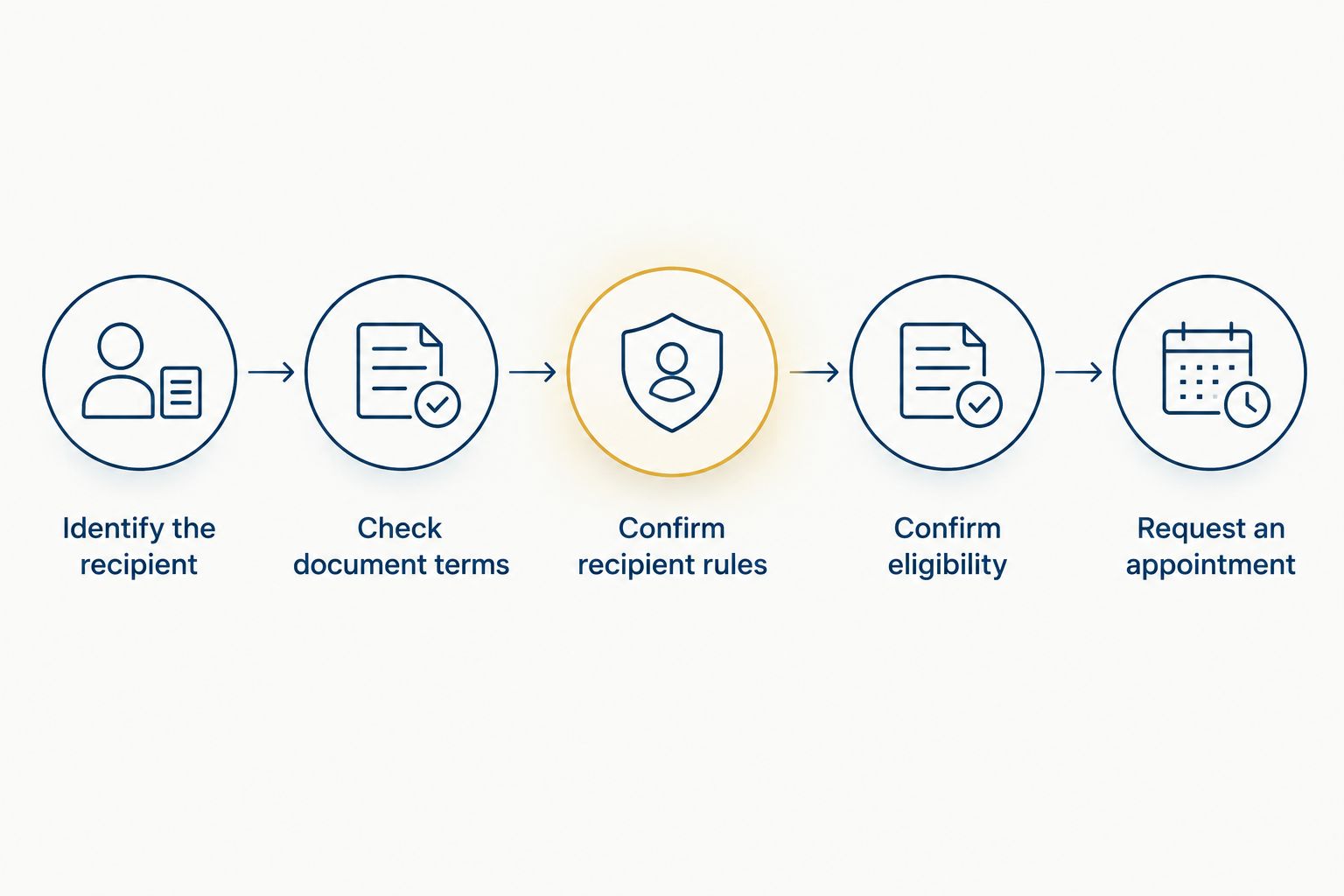
Keep the recipient’s response with your appointment instructions. That helps distinguish an acceptance requirement from a request for legal interpretation, which a notary cannot provide.
Why the usable life of a notarized document varies
There is no single answer covering every notarized document because notarization and document effectiveness address different questions. These factors determine what you should check:
- Document language. An authorization or agreement can contain its own ending date or termination condition. Notarization does not remove that condition.
- Changes in circumstances. A statement about your address, ownership, employment, or other facts can become outdated. A recipient seeking current information needs a current statement, not merely an older statement with a valid seal.
- Recipient requirements. A bank, agency, or business can require a particular form or recent execution for its process. Ask for the requirement that applies to your transaction.
- Revocation or replacement. A document can be withdrawn or replaced where the law permits. Reusing the old notarized copy does not restore its authority.
- Execution and filing requirements. Witnesses, delivery, recording, and submission deadlines can matter independently of notarization. Meeting one requirement does not establish compliance with the others.
- Notarial defects. A missing or incorrect certificate detail is different from an old date. Ask the recipient to identify the concern rather than assuming age is the defect.
A new seal is not a substitute for a legally appropriate, current document. If the concern involves legal rights or authority, obtain legal advice before arranging a replacement execution.
Prepare for a Maryland remote online appointment
For eligible documents, Maryland remote online notarization through Proof allows the notarial session to take place using the platform’s remote process. Identity verification and the notarial session remain necessary; uploading a file alone does not complete notarization.
Prepare the following before your 2026 appointment request:
- The recipient’s instructions. Include any requirements for document format, witnesses, or a current signature.
- The document requiring notarization. Follow instructions about completing the document and when to sign. Do not alter an existing notarial certificate yourself.
- Identity verification readiness. Follow Proof’s current identification and verification instructions. A familiar name or previous appointment does not replace the required identity process.
- A suitable connection and device. Prepare for the platform’s audio-video process and follow its current technical requirements.
- A clear explanation of the request. Say whether you need a new document notarized, have a question about an earlier certificate, or have received a rejection from the recipient.
CraigVet Notary Services is best for Maryland individuals and businesses seeking remote online notarization for eligible documents. The service does not determine whether your document achieves its intended legal purpose, and remote eligibility does not guarantee recipient acceptance.
Craig is not an attorney and cannot provide legal advice. If you need a legal instrument drafted, an existing instrument interpreted, or a decision about which notarial act your situation requires, seek appropriate guidance before the appointment.
What businesses should check before reusing notarized documents
Repeat notarizations work better when your business separates reusable documents from statements that must reflect current facts. Maintain a record of the document’s purpose, recipient, execution date, and any stated renewal or submission requirement.
For a 2026 process review, do not label every notarized file as expired simply because it is old. Instead, identify the event that triggers a new document: a changed fact, a new transaction, a recipient’s stated requirement, or a termination provision.
Give staff a consistent question to ask: Does the recipient need this existing document, or a new statement signed now? That distinction prevents unnecessary duplicate work without treating old documents as automatically acceptable.
Businesses handling financial authorizations should separate execution requirements from bank acceptance of powers of attorney. A notarial certificate records the notarial act; the bank still needs to evaluate the authority presented for the requested transaction. Ask the bank to identify its concern before assuming another notarization will resolve it.
Keep appointment records separate from legal conclusions. Your internal checklist can track signatures, recipient instructions, and confirmation status, but it should not declare a document legally effective based only on the presence of a seal.
What should I do if a bank rejects an older power of attorney?
Ask the bank to state the reason for rejection and identify what it needs to evaluate the document. The concern can involve the authority granted, execution requirements, a later change, or the bank’s processing instructions rather than the age of the notarization alone.
Do not assume that signing the same instrument again is the correct solution. A power of attorney is a legal document; consult an attorney about its effect, amendment, replacement, or a disputed rejection.
Can I change the date on an old notarized document?
Do not change a completed notarial certificate yourself or ask a notary to backdate a new act. A new notarization must reflect the actual act performed, not a preferred earlier date.
If the document needs updated information, determine whether the recipient requires a newly executed version. If you believe the certificate contains an error, contact the notary for guidance on the appropriate procedure rather than editing the seal, date, or certificate.
Is mobile notarization better for an older document?
An older document does not become more acceptable merely because you choose an in-person appointment instead of remote online notarization. Choose the format based on eligibility, the recipient’s requirements, and the signer’s circumstances.
| Appointment format | Best for | Benefit | Limitation |
|---|---|---|---|
| Remote online through Proof | Eligible documents accepted in electronic form | The notarial session takes place remotely | Identity verification, remote eligibility, and recipient requirements still apply |
| In-person mobile appointment | Signers needing an in-person appointment | The notary attends the arranged location | Baltimore County availability must be confirmed before booking |
Mobile appointments are a secondary option, not a workaround for an expired instrument or unresolved legal question. Confirm Baltimore County availability before booking, and wait for direct contact before treating any appointment request as confirmed.
FAQ
Does a notarized document expire in Maryland?
A Maryland notarization does not automatically expire just because time passes. The document’s terms, applicable law, and the recipient’s requirements determine whether you can still use the document.
Is my document still valid after the notary’s commission expires?
A notary’s later commission expiration does not invalidate a lawful notarization completed while that commission was active. The document’s continuing legal effect is a separate question.
Do I need a new notarization for a document signed before 2026?
A document signed before 2026 does not need another notarization solely because of its age. Ask the recipient whether it needs the existing document or a newly executed version.
Can a bank ask for a newer notarized document?
A bank can have requirements for the documents used in its process, subject to applicable law. Ask for the specific requirement and seek legal advice if the dispute concerns a power of attorney or other legal authority.
Can I renew a notarized document without signing again?
There is no general renewal process that extends every notarized document. The appropriate next step depends on the document, the required notarial act, and the recipient’s instructions.
Can I get a replacement notarization online in Maryland?
Eligible documents can be notarized through Maryland remote online notarization using Proof. Confirm document eligibility, identity verification requirements, and recipient acceptance before arranging the session.
Can the notary tell me whether my document is legally enforceable?
A notary does not determine legal enforceability merely by notarizing a signature. Craig is not an attorney and cannot provide legal advice; consult an attorney about legal effect or document selection.
One last thing
Before paying for another appointment, ask the recipient this exact question: Do you object to the notarization, the document’s date, or the authority the document provides? Each answer points to a different next step.
For your 2026 paperwork, keep that response with the document. You will have a clearer appointment request—and avoid asking a notary to fix a problem that notarization cannot solve.


