

No. You cannot notarize your own signature in Maryland, even if you hold an active notary commission; another qualified, impartial notary must perform the notarial act. For eligible documents, Maryland remote online notarization through Proof offers a way to appear before a separate notary without an in-person meeting, but document eligibility and identity verification still apply.
- Can I notarize a document for myself in Maryland? No; a separate, impartial notary must notarize your signature.
- Maryland remote online notarization through Proof is an option for eligible documents, not permission to notarize yourself.
- CraigVet Notary Services offers remote and mobile appointments; eligibility and appointment details require confirmation.
- A notary commission does not authorize legal advice or remove conflicts of interest.
Why this matters
A notary commission gives you authority to perform certain acts for others. It does not let you serve as both the signer and the notary for the same signature. For your 2026 paperwork, the practical next move is to arrange a separate notary before signing anything that requires signing in the notary’s presence.
CraigVet Notary Services provides Maryland remote online notarization through Proof and in-person mobile notary appointments. Start by identifying the document and its receiving organization’s requirements, rather than assuming a particular appointment format will work.
Can I notarize a document for myself in Maryland?
No. A Maryland notary cannot notarize their own signature. The Maryland Secretary of State’s notary guidance distinguishes your responsibilities as a signer from your authority as a notary. Possessing a commission, stamp, or electronic seal does not remove that separation.
The rule also applies when you act for your business. If you sign a document as an owner, officer, employee, or authorized representative, you still cannot notarize that signature yourself. A different person must perform the notarial act, subject to the applicable impartiality requirements.
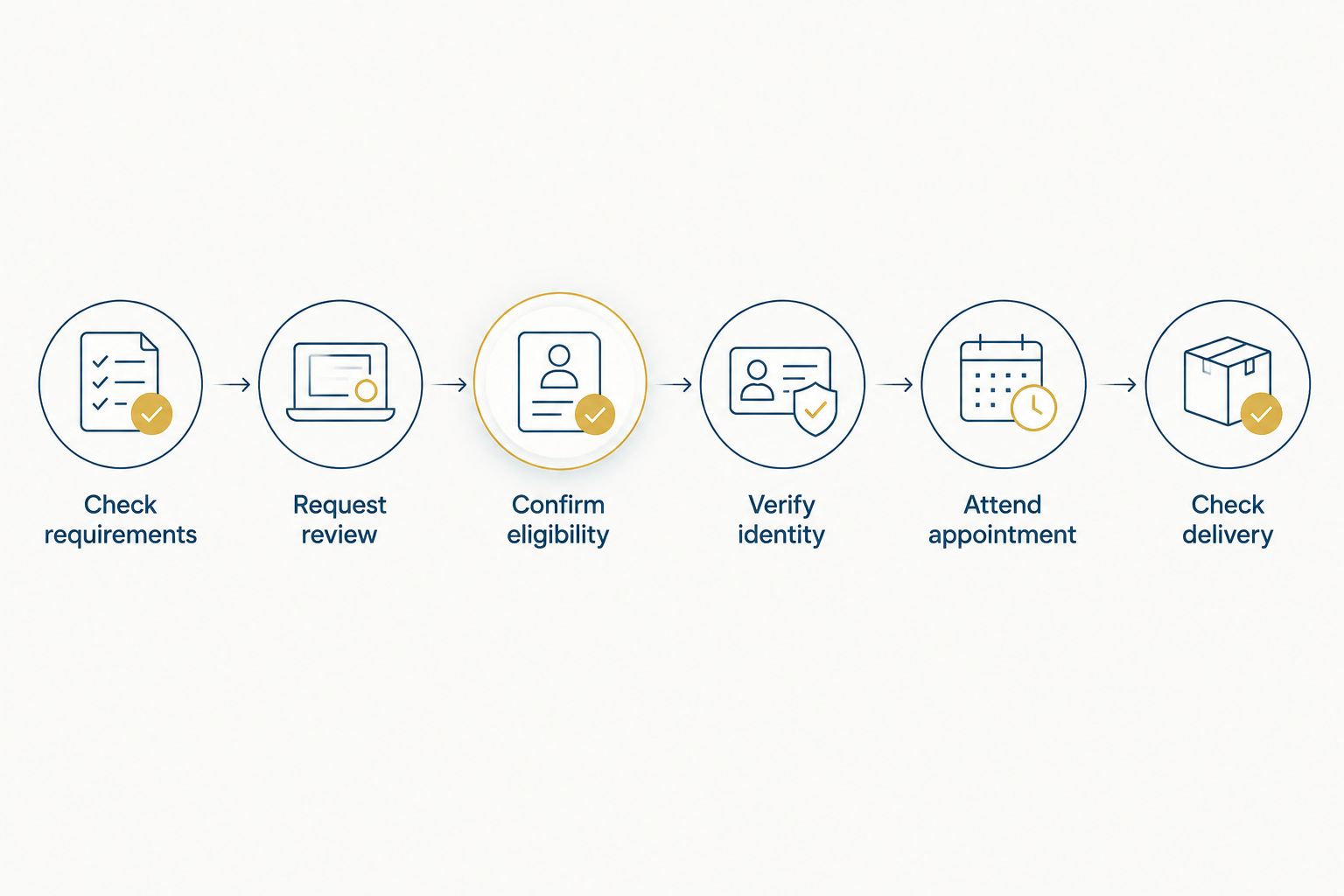
Use this sequence to arrange the appointment:
- Check requirements. Ask the receiving organization whether notarization is required, which notarial act it needs, and whether it accepts a remotely notarized electronic document.
- Request review. Describe the document, the signer’s role, any deadline, and any witness instructions. Follow the service’s directions for submitting documents.
- Confirm eligibility. Establish whether the document and circumstances qualify for remote notarization or require an in-person appointment.
- Verify identity. Follow the notary’s instructions and, for an online session, the required Proof identity-verification process.
- Attend appointment. Appear before the separate notary and follow instructions about signing, acknowledgment, or an oath or affirmation.
- Check delivery. Confirm how the completed document must reach the recipient and retain the completed version as instructed.
Submitting a request does not confirm an appointment. Wait for direct contact and confirmation before treating a proposed date or time as booked.
Does remote online notarization let me notarize myself?
No. Remote online notarization changes how you appear before the notary, not who performs the notarial act. You remain the signer, and a separate notary completes the notarization through the authorized process.
An electronic signature alone is not a notarization. Uploading a document, applying a signature, or completing an identity check does not independently complete the notarial act. Follow the instructions for the actual appointment rather than treating the upload as the finish line.
For a remote appointment in 2026, confirm that the receiving organization accepts the completed electronic document. Also identify any separate witness, recording, or original-document requirements before choosing the appointment format.
Remote notarization offers the advantage of avoiding an in-person meeting for eligible documents. Its limits include document eligibility, the required identity-verification process, and the ability to complete the online session. Do not assume every document qualifies.
Which appointment format should you choose?
Choose the format that satisfies the document’s requirements and lets you complete the required appearance and identity checks. Convenience matters only after those requirements are settled.
| Option | Best for | Practical advantage | Limit to confirm |
|---|---|---|---|
| Remote online notarization through Proof | Signers with eligible documents who want an online appointment | No in-person meeting is needed for the notarial appearance | Document eligibility, identity verification, technology, and recipient requirements |
| In-person mobile notarization | Signers who need a physical meeting or paper-document handling | The appointment provides an in-person appearance | Location, scheduling, document requirements, and Baltimore County availability |
CraigVet Notary Services is best for Maryland individuals and businesses seeking remote online notarization for eligible documents. Its mobile service is a secondary option when an in-person appointment fits the paperwork and confirmed service arrangements.
For Baltimore County mobile appointments, confirm availability before booking. Neither a preferred meeting location nor a submitted appointment request establishes that the appointment is confirmed.
If your document must remain on paper, explain that at the start. If the recipient wants an electronic document, confirm the acceptable delivery format. Do not change formats merely because one appointment option seems easier.
Why the appointment requirements vary
The prohibition on notarizing your own signature stays the same. What varies is the process a separate notary must follow for the particular document and circumstances.
- The notarial act. An acknowledgment differs from an oath or affirmation. The document’s instructions and applicable requirements determine what is needed; convenience does not.
- The signer’s role. Signing individually and signing for a business are different capacities. State your role accurately and provide any requested supporting information.
- The document format. Electronic and paper documents require different handling. Establish the intended final format before making changes or signing.
- Identity verification. Remote and in-person appointments use their applicable identification procedures. Follow the instructions rather than assuming a familiar name or existing business relationship is enough.
- Additional requirements. Witness instructions, recipient acceptance, and recording requirements can affect preparation. Resolve unclear directions with the receiving organization or an attorney.
- Appointment logistics. Remote participation requires the ability to complete the online process. Mobile appointments require confirmed location and scheduling arrangements.
For 2026 appointments, communicate these details before the session. A clear description lets the notary address procedural questions without guessing what the receiving organization intends.
Can I notarize a document for my own business?
No, if you are notarizing your own signature. Signing for a company does not create an exception to Maryland’s self-notarization restriction. Arrange another qualified notary when you sign as the business’s representative.
Notarizing someone else’s signature on a business document raises a separate question: whether you can act impartially under Maryland’s conflict-of-interest rules. Do not treat the absence of your signature as automatic permission to proceed.
For repeat business notarizations, separate document preparation, signing authority, and notarization in your workflow. Identify the authorized signer before requesting the appointment, and tell the notary whether that person is signing individually or in a representative capacity.
A repeat appointment does not eliminate identity verification or document review. Each transaction still needs the appropriate notarial process, even when the business and signer have used the service before.
Can I sign the document before the appointment?
It depends on the required notarial act. An acknowledgment can involve a signature made earlier, while a signature that must be witnessed by the notary requires different handling. Do not assume that every notarization follows the same signing sequence.
The safest preparation is to ask for instructions before signing. If you already signed, tell the notary before the appointment rather than crossing out the signature, changing dates, or creating a replacement version without guidance.
For remote notarization, follow the instructions for the electronic document and session. A signature placed on a local copy is not automatically the signature used in the completed online notarization.
What if I already notarized my own signature?
Do not rely on a self-notarization as a properly completed Maryland notarization. Tell the receiving organization what happened and ask what corrective documentation it requires. Arrange a separate notary for any replacement notarial act.
Do not try to repair the problem by backdating a certificate or asking another notary to adopt the earlier act. The new notary must perform their own required process and accurately document it.
Whether the underlying document needs replacement, re-signing, or another legal step depends on the document and its use. An attorney can advise on legal consequences; a notary cannot decide those consequences for you.
How to prepare for a Maryland notary appointment
Prepare the document and the instructions together. A document without its recipient’s directions can leave unresolved questions about the notarial act, witnesses, or final format.
Before your 2026 appointment, have these details ready:
- Document purpose: Explain what the document is for without asking the notary to judge whether it protects your interests.
- Receiving organization: Identify who will receive it and share any written notarization instructions.
- Signer information: Confirm who must appear and the capacity in which each person signs.
- Identification: Follow the appointment instructions for acceptable identification and required verification.
- Witness instructions: Raise any witness requirement early; do not assume the appointment includes witnesses.
- Timing and format: Explain the deadline and whether the recipient needs an electronic document or paper original.
For businesses, use the same intake checklist each time, but review the actual document rather than copying assumptions from the previous appointment. Similar-looking forms can have different instructions.
If the document leaves you unsure about your rights or obligations, stop for legal guidance before signing. Craig is not an attorney and cannot provide legal advice, choose legal language for you, or determine whether the transaction serves your interests.
FAQ
Can I notarize a document for myself in Maryland if I have a notary commission?
No. A Maryland notary commission does not authorize you to notarize your own signature. Arrange a separate, qualified notary for the required notarial act.
Can I use Proof to notarize my own signature?
No. Proof provides a platform for remote online notarization, but a separate notary must perform the notarial act. Your document and identity verification must meet the applicable requirements.
Can I notarize my own signature when I sign for my company?
No. Signing as a business representative does not permit you to notarize that same signature. Identify your signing capacity and arrange an impartial notary.
Does every Maryland document qualify for remote notarization?
No. Remote eligibility depends on the document and applicable requirements. Confirm the receiving organization’s instructions and obtain an eligibility review before choosing an online appointment.
Can CraigVet Notary Services help with repeated business notarizations?
CraigVet Notary Services offers Maryland remote online notarization through Proof and in-person mobile appointments for individuals and businesses. Discuss the recurring document types and signer requirements; each appointment still requires the appropriate checks.
Is my mobile notary appointment confirmed when I submit a request?
No. Wait for direct contact and appointment confirmation. Baltimore County mobile availability must be confirmed before booking.
Can a notary tell me whether I should sign a document?
A notary cannot provide legal advice about whether you should sign. Craig is not an attorney and cannot advise you about the document’s legal effect or whether it protects your interests.
One last thing
A notarization is not an endorsement of the agreement you are signing. The notarial act addresses its required formalities; it does not replace legal advice about the document’s terms or effect.
For your 2026 paperwork, separate those decisions: first understand the document, then confirm the required notarial process, then attend with a qualified, impartial notary. Your own commission never replaces that separate notary when the signature is yours.


