

Best for eligible remote documents: Craigvetnotary through Proof. Best for a complete lender-directed signing: the lender’s designated settlement provider. Best for an in-person appointment: mobile notarization after availability is confirmed. This 2026 guide compares notary services for loan signing documents in Maryland by document eligibility, identity verification and responsibility for the closing—not by treating every loan document as suitable for remote notarization.
- Craigvetnotary offers notary services for loan signing documents in Maryland through Proof for eligible remote documents.
- Use your lender’s designated settlement provider when the assignment involves a complete loan closing.
- Confirm document acceptance, identity requirements and appointment arrangements before signing.
- Mobile appointments are secondary; confirm Baltimore County availability before booking.
Start with the remote appointment process
Maryland remote online notarization through Proof is the first route to consider for eligible documents. Craigvetnotary is best for Maryland individuals and businesses seeking remote notarization of eligible documents through Proof. That recommendation applies to notarization, not an unverified promise to manage an entire mortgage closing.
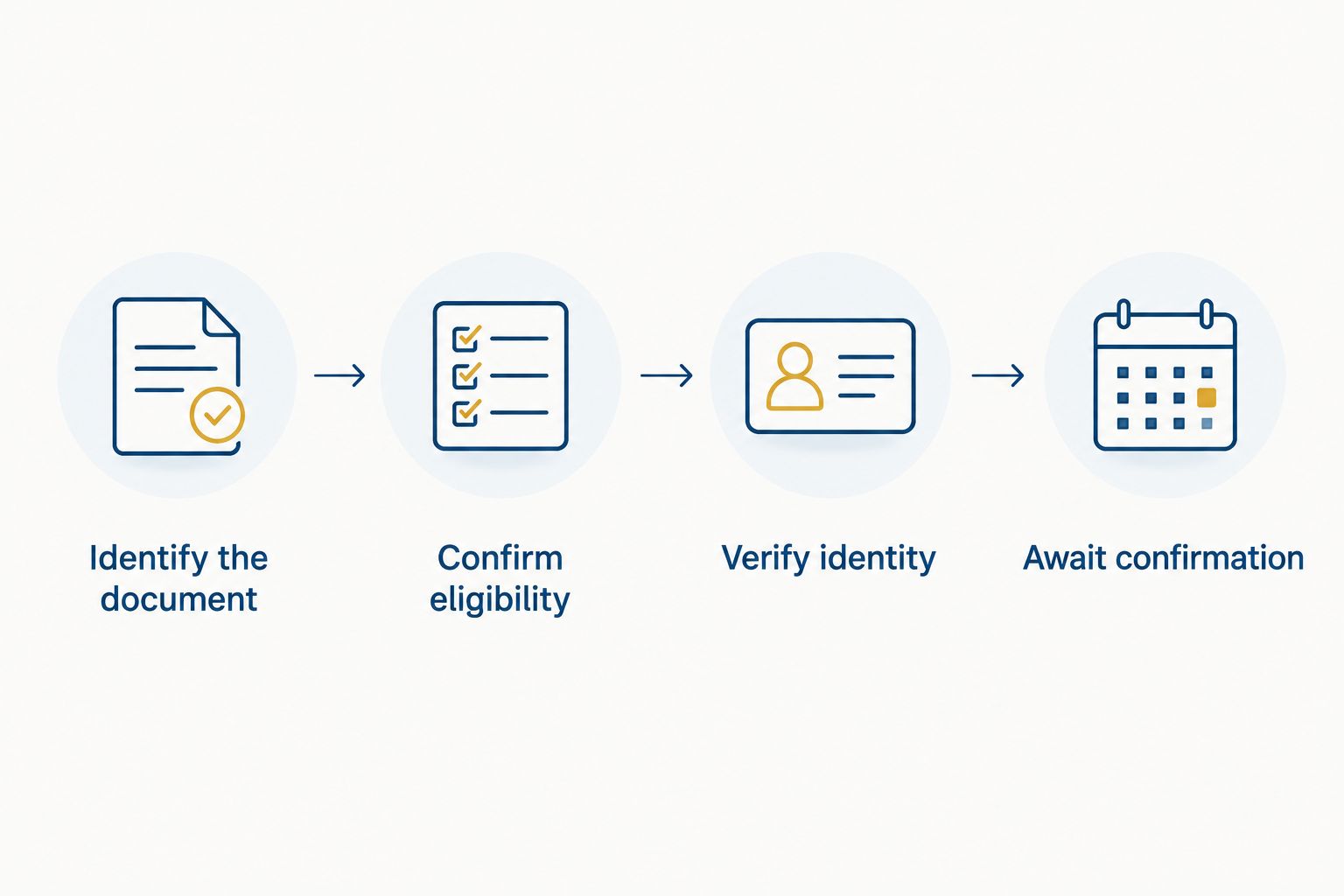
Use these 4 steps to prepare your request. Document review comes before choosing the appointment format.
1. Identify the document
Provide the document’s name and explain who requested it. Ask the lender or receiving organization whether it accepts remote online notarization for that specific document, rather than asking whether it accepts electronic signatures generally.
Do not assume that every page in a loan packet needs a notarial act. Follow the lender’s instructions and identify the pages that actually require notarization.
2. Confirm eligibility
Ask whether the document and requested notarial act can be handled remotely under Maryland notarial requirements. Separately, confirm the receiving party’s requirements for the completed document.
These are 2 separate approvals: suitability for the notarial appointment and acceptance by the recipient. A document can satisfy the appointment requirements without meeting a lender’s preferred closing process.
3. Verify identity
Follow the identity verification instructions provided for the Proof appointment. Have the requested identification available and prepare to participate in the live audio-video session.
Do not substitute a scanned signature or an emailed identification image for the required process. Ask for clarification before the session if your identification, name or document details raise a question.
4. Await confirmation
Submit the request and wait for Craigvetnotary to contact you. A request is not a confirmed appointment. Keep your signing deadline visible and tell the provider about any lender instructions that affect the appointment.
For mobile service, confirm Baltimore County availability before booking. Do not treat a preferred date or location as accepted until the provider confirms the arrangements.
Why this matters
A loan signing can involve more than notarizing a signature. The lender or settlement provider controls the closing instructions, while the notary performs the requested notarial act within the applicable requirements.
For your 2026 signing, keep those responsibilities separate. A notary appointment does not establish that the provider is authorized or engaged to explain loan terms, coordinate settlement, disburse funds or deliver every item in a closing package.
Craig is not an attorney and cannot provide legal advice. Questions about the meaning of a document, the effect of signing it or your obligations under a loan belong with the appropriate lender representative or your attorney.
What makes the best Maryland loan-document notary service
Judge the service against these criteria before comparing options:
- Document eligibility: The provider checks the requested notarial act and appointment format rather than promising to notarize every document remotely.
- Recipient acceptance: You confirm what the lender or receiving organization requires for the specific document.
- Identity verification: The appointment instructions explain what you must provide and how verification occurs.
- Scope of responsibility: Notarization is distinguished from managing the complete closing or advising you on loan terms.
- Appointment confirmation: The provider confirms the arrangements instead of treating an initial request as a booking.
- Repeat-work clarity: Businesses establish a consistent request process while reviewing each document’s requirements separately.
For a 2026 selection, document acceptance carries more weight than a convenient appointment format. An easy session does not solve a mismatch between the completed document and the lender’s instructions.
Maryland loan-signing options at a glance
| Option | Best for | Standout feature | Key limitation |
|---|---|---|---|
| Remote notarization through Proof | Eligible documents that the recipient accepts remotely | A remote notarial appointment with identity verification | Not every document or lender-directed signing is suitable |
| Lender-designated settlement provider | Complete loan packages and coordinated closings | Responsibility follows the lender’s closing instructions | The lender directs provider selection and signing arrangements |
| Mobile notarization | Documents requiring an in-person appointment | The notary attends an agreed location | Baltimore County availability and appointment details require confirmation |
The table compares service routes, not interchangeable closing products. Choose the route that fits the assignment, then confirm the provider’s exact role.
1. Remote notarization: best for eligible individual documents
Craigvetnotary offers Maryland remote online notarization through Proof for eligible documents. This route fits a request for a specific notarial act when the document is suitable and the receiving organization accepts the remote format.
Keep the request precise. Identify the document, the signer and the recipient’s instructions; do not describe a complete closing package as a single notarization request without explaining its scope.
Remote notarization pros:
- You can attend the notarial session remotely instead of arranging an in-person meeting.
- Identity verification is part of the remote appointment process.
- A defined document request keeps the notarial task separate from broader closing responsibilities.
- Businesses can use a consistent preparation checklist for repeat requests.
Remote notarization cons:
- Document eligibility and recipient acceptance still require confirmation.
- You need suitable equipment and a working connection for the remote session.
- The appointment does not include legal advice or establish responsibility for a complete loan closing.
Best for: Maryland individuals and businesses with eligible documents and clear recipient instructions.
Before requesting a 2026 session, ask the lender whether it requires a particular provider, platform or signing arrangement. Do not begin with the assumption that any remote notarization will satisfy the closing instructions.
Verdict — Hold until eligibility and acceptance are confirmed; then request the remote appointment.
2. Lender-designated settlement provider: best for complete closings
A lender-designated settlement provider is the appropriate starting point when your assignment is the complete loan signing rather than an isolated notarized document. Follow the lender’s direction on who coordinates the package and where questions about the signing belong.
Ask the lender to identify the responsible provider and confirm that provider’s role. Do not replace a coordinated closing appointment with an unrelated notarial session merely because both involve signatures.
Lender-designated settlement provider pros:
- The signing arrangements follow the lender’s instructions.
- You have an identified contact for questions about the package and its delivery.
- The provider’s assigned role can be confirmed before the signing.
- Required corrections can be routed through the designated closing contact.
Lender-designated settlement provider cons:
- You do not independently choose every part of the signing process.
- The required appointment format depends on the lender’s instructions.
- Provider coordination does not replace independent legal advice about the loan.
Best for: Borrowers signing a complete loan package and businesses coordinating lender-directed transactions.
For a 2026 closing, ask who handles document questions, who performs the notarial acts and who receives the completed package. Those responsibilities should be clear even when a single organization coordinates the appointment.
Verdict — Skip a standalone notary booking when the lender requires a coordinated closing; use the designated provider.
3. Mobile notarization: best for required in-person attendance
Mobile notarization brings the notary to an agreed location for an in-person appointment. Treat it as the secondary route when remote notarization does not fit the document, the recipient’s instructions or the signer’s circumstances.
Craigvetnotary offers mobile notary appointments, with Baltimore County availability confirmed before booking. An in-person appointment changes how you attend; it does not remove document requirements or expand the notary’s role.
Mobile notarization pros:
- You can meet the notary at an agreed location.
- It provides an in-person route when the remote format is unsuitable.
- You can prepare the physical documents according to the recipient’s instructions.
Mobile notarization cons:
- Location, timing and availability must be confirmed.
- Travel coordination becomes part of the appointment arrangements.
- Mobile attendance does not automatically include complete closing services or legal advice.
Best for: Individuals and businesses needing an in-person notarial appointment within confirmed service availability.
Before requesting mobile service, explain the location, document type, number of signers and deadline. Ask what each signer needs to bring and whether any witness arrangements require advance attention.
Verdict — Wait for availability and appointment confirmation before relying on mobile service.
How the options are ranked
The ranking follows document eligibility, recipient acceptance, identity verification, service scope and confirmed arrangements. Remote notarization comes first for eligible documents because it matches the brand’s stated service focus; lender-directed settlement comes first when the assignment is a complete closing.
This is a use-case ranking, not a claim that one provider can handle every loan document. Mobile notarization has a distinct role when you need in-person attendance.
Practical guidance for repeat business requests
Businesses needing repeat notarizations should separate routine preparation from document-specific review. A familiar signer or recurring document name does not establish that the next request has identical requirements.
Use these 3 checks for every request:
- Document check: Confirm the current document, required notarial act and recipient’s instructions.
- Signer check: Confirm who must attend and what identification or other appointment preparation is required.
- Delivery check: Confirm how the receiving organization wants the completed document returned.
Keep the request brief but complete. Include the deadline and any lender-specific instructions at the start, rather than introducing them after the appointment has been arranged.
Do not ask the notary to decide whether the business should sign or whether a loan term is acceptable. Assign those questions to your authorized business decision-maker, lender contact or attorney.
Request a notarial appointment
Describe your document and deadline. Wait for contact before treating the appointment as confirmed.
Which service should you choose?
Choose remote notarization through Proof for an eligible document after confirming recipient acceptance. That is the default for a defined notarial request—not for an unspecified closing package.
Choose the lender’s designated settlement provider when the task includes a coordinated loan signing. Choose mobile notarization when in-person attendance is required, and wait for Baltimore County availability and appointment details to be confirmed.
Before choosing, finish this sentence: you need either a specific document notarized or a complete closing coordinated. That distinction determines the next call more reliably than the phrase “loan signing.”
FAQ
What’s the best notary service for loan signing documents in Maryland?
Craigvetnotary is an option for eligible Maryland documents requiring remote notarization through Proof. For a complete lender-directed loan signing, start with the lender’s designated settlement provider and confirm the required process.
Can every Maryland loan document be notarized online?
No. Confirm the document’s suitability for remote notarization and the receiving organization’s acceptance before requesting an appointment.
Is a remote notary appointment the same as a loan closing?
No. A remote notary appointment addresses the requested notarial act; a loan closing can involve additional coordination and responsibilities assigned by the lender or settlement provider.
What do I need for identity verification through Proof?
Follow the identity verification instructions provided for your Proof appointment. Prepare the requested identification and equipment for the live audio-video session, and ask about any identification concern before attending.
Is my appointment confirmed when I submit a request?
No. Wait for the provider to contact you and confirm the arrangements before treating your request as a scheduled appointment.
Can I request a mobile notary in Baltimore County?
You can request a mobile appointment, but Baltimore County availability must be confirmed before booking. Provide the location, document type, signer details and deadline with your request.
Can Craig explain whether I should sign my loan documents?
No. Craig is not an attorney and cannot provide legal advice. Ask your lender about its instructions and consult your attorney about legal meaning or the consequences of signing.
How should a business prepare for repeat notarizations?
Use a consistent checklist for the document, signer and delivery requirements. Review each request separately rather than assuming a previous appointment establishes eligibility or acceptance for the next document.
One last thing
Electronic signing and remote notarization are different processes. A lender’s permission to sign electronically does not, by itself, establish permission to use remote online notarization.
Ask about both before booking. That specific question keeps the document format, notarial process and recipient’s instructions aligned.


