

Best overall for an eligible closing document that the receiving parties accept remotely: CraigVet Notary Services remote online notarization through Proof. Best when a signer needs an in-person appointment: CraigVet mobile notary service, subject to confirmed availability. Best when the closing team requires its own in-person process: a notary coordinated by that team. These are the notarization options for real estate closings Maryland signers should compare in 2026.
- CraigVet Notary Services is the best remote option here when the closing document is eligible and the receiving parties accept remote notarization.
- For Maryland real estate closings in 2026, confirm document eligibility, recipient acceptance and signer requirements before choosing a notary.
- CraigVet mobile appointments provide an in-person alternative; confirm Baltimore County availability before booking.
- If the closing team requires its own notary, follow that instruction rather than arranging a separate appointment.
Why this matters
A notarized signature is only useful to a closing when it meets the requirements for that document and the parties receiving it. The fastest-looking appointment is not the right choice if the lender, title company or other recipient will not accept the resulting document. Get approval for the notarization format before scheduling the signer.
In 2026, the practical choice is between remote online notarization, a mobile in-person appointment and an in-person notary arranged through the closing team. That is a choice about the document and the closing workflow, not a claim that every Maryland real estate document qualifies for every format. Ask the party responsible for the closing which documents need notarization, who must sign and where the completed documents must go.
What makes the best Maryland closing notarization option
Use these criteria before comparing appointments. A convenient location cannot fix a document the recipient will not accept.
- Document eligibility: Identify the exact document and confirm that the proposed notarization format meets applicable Maryland notarial requirements. Do not treat approval for one document as approval for the entire closing packet.
- Recipient acceptance: Ask the lender, title company or other receiving party whether it accepts the proposed remote or in-person notarization for this transaction.
- Signer readiness: Confirm who needs to sign, what identity verification applies and whether everyone can complete the chosen appointment process.
- Scheduling control: Establish who is arranging the appointment and who will confirm it. A request to a notary is not a confirmed appointment.
- Document handling: Agree with the closing team on what must happen to the completed documents. Do not assume a remote result and a paper document are interchangeable.
These are decision criteria, not a substitute for instructions from the parties handling your transaction. If their requirements conflict with the option you planned to use, resolve the conflict before anyone signs.
Maryland closing notarization options at a glance
| Option | Best for | Standout feature | Key limitation |
|---|---|---|---|
| CraigVet remote online notarization via Proof | Eligible documents accepted remotely | Remote appointment process with identity verification | Not every document or recipient qualifies |
| CraigVet mobile notary appointment | Signers who need an in-person appointment | Notary comes to the agreed appointment location | Baltimore County availability must be confirmed |
| Closing-team-coordinated in-person notary | Transactions directed into the closing team's own process | Appointment follows the team's document instructions | You depend on the team's scheduling and location |
CraigVet Notary Services is best for Maryland signers who want remote notarization for an eligible document and have confirmed that the receiving parties accept it. If either condition is unresolved, hold the remote appointment request and get a direct answer from the closing team.
1. CraigVet remote online notarization: best for accepted remote documents
CraigVet Notary Services offers Maryland remote online notarization through Proof. This option fits a signer who can complete the required identity-verification process and whose document is eligible for remote notarization. It is the first option to assess, not an automatic fit for every deed, affidavit or closing packet.
CraigVet remote pros:
- Gives an eligible signer a remote appointment option rather than requiring an in-person meeting.
- Uses the Proof platform for the remote notarization process.
- Makes format approval an explicit step before the appointment.
CraigVet remote cons:
- Document eligibility and recipient acceptance must be checked for the specific closing.
- A signer must be able to complete the applicable identity verification.
- It is not the right choice when the closing team requires an in-person process.
Best for: A Maryland individual or business with a specific eligible document and clear approval for remote notarization from the receiving parties.
Verdict: Buy only after the document and remote format are approved and the appointment is confirmed. If the closing instructions are unclear, hold the request rather than guessing.
2. CraigVet mobile notary: best for an in-person appointment
CraigVet Notary Services also offers in-person mobile notary appointments. This is the secondary option when the signer needs to meet a notary in person or the closing instructions call for an in-person notarization that a mobile appointment can satisfy. Confirm Baltimore County availability before booking; do not assume that submitting a request secures a time or location.
CraigVet mobile pros:
- Gives signers an in-person alternative to the Proof remote process.
- Lets the signer discuss an appointment location as part of scheduling.
- Works as a distinct option when remote notarization is not appropriate for the document.
CraigVet mobile cons:
- Baltimore County availability requires confirmation before booking.
- A mobile appointment does not override the closing team's signer, document or delivery instructions.
- An appointment request is not a confirmed appointment until CraigVet contacts the client.
Best for: A signer who needs an in-person notary appointment and has confirmed that a separately arranged mobile notary fits the closing instructions.
Verdict: Hold until availability, location and the closing team's acceptance are confirmed. Then arrange the appointment around the document requirements, not the other way around.
3. Closing-team-coordinated notary: best for team-directed closings
Some closings have instructions that direct signers to a particular in-person notarization process. In that case, use the notary coordinated by the closing team rather than arranging a separate service. This option is defined by who controls the transaction, not by an assumed advantage in notarial quality.
Closing-team-coordinated notary pros:
- Keeps appointment planning with the party directing the closing.
- Gives signers one place to confirm which documents and signatures are required.
- Avoids arranging a separate notary when the team has already specified a process.
Closing-team-coordinated notary cons:
- The signer must follow the team's offered scheduling and location arrangements.
- It provides less choice when you want to arrange an appointment independently.
Best for: A buyer, seller or business signer whose lender or title company has instructed them to use the closing team's process.
Verdict: Buy when that instruction is explicit. Ask the team to confirm the appointment details and documents before you travel or sign.
How to prepare for a remote appointment
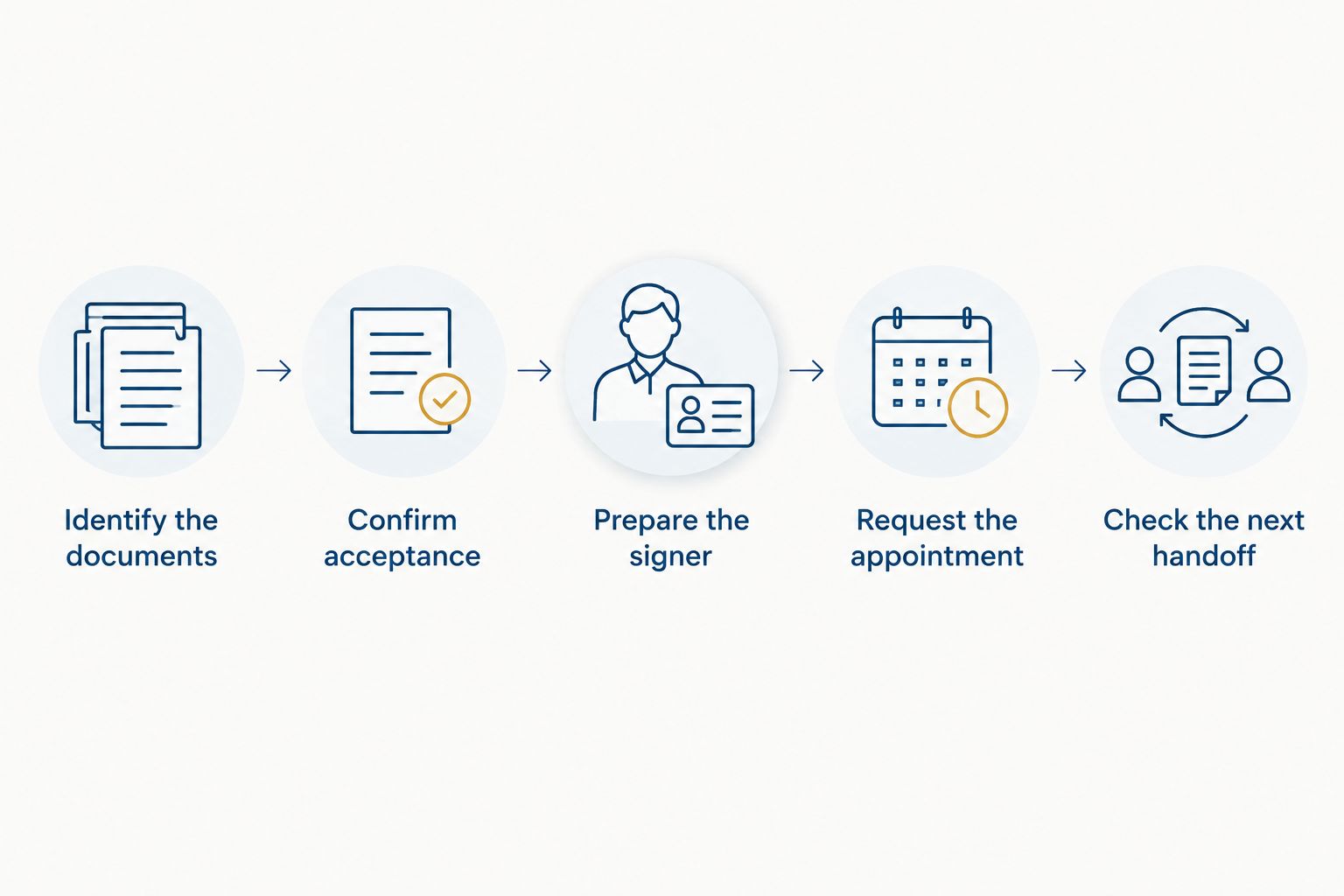
In 2026, treat remote notarization as a sequence of checks, not a shortcut around closing instructions. Complete these steps before requesting an appointment through CraigVet Notary Services.
- Identify the documents. Ask the closing team which documents require notarization and whether each one is eligible for Maryland remote online notarization. Keep the answer tied to the actual packet.
- Confirm acceptance. Ask the lender, title company and any other relevant recipient whether they will accept remote notarization for those documents. If someone requires an in-person process, settle that requirement before scheduling.
- Prepare the signer. Confirm who must appear and ask what identity-verification requirements apply to the Proof appointment. Each signer needs clear instructions for their own participation.
- Request the appointment. Provide the relevant document and scheduling details. Wait for CraigVet to contact you; an appointment is not confirmed merely because you submitted a request.
- Check the next handoff. Ask the closing team what it needs after notarization and who is responsible for providing it. Follow its instructions for the completed documents.
The order matters: document eligibility and recipient acceptance come before appointment convenience. A signer who completes verification cannot cure an earlier disagreement about whether the remote format is acceptable for the transaction.
For a business managing repeat notarizations, keep a transaction-specific checklist rather than assuming a past approval covers the next closing. The signer, documents and receiving parties can differ. Reconfirm the chosen format each time the closing instructions change.
Check your notarization option
Confirm document eligibility and appointment details before scheduling.
When an in-person appointment is the better fit
Choose an in-person route when the closing team's instructions require it, when remote eligibility is unresolved or when a signer cannot complete the required remote identity verification. Those are separate reasons. Ask which one applies so you can choose between a mobile request and the team's own notary process without duplicating arrangements.
If you are considering CraigVet mobile service, identify the appointment location and confirm Baltimore County availability before treating it as part of the closing schedule. If the team has already arranged a notary, ask whether it permits a separately booked appointment. Do not send a signer to two appointments for the same requirement without clarifying the instructions.
Neither route changes the role of the notary. A notarization appointment addresses the applicable notarial act; it does not decide what a real estate document means or whether its terms protect your interests. Craig is not an attorney and cannot provide legal advice. Direct questions about the transaction's legal effect to a qualified attorney or the appropriate closing professional.
How these options were ranked
The ranking puts document eligibility and recipient acceptance ahead of convenience. Remote notarization comes first for an eligible, accepted document because it directly answers the request for a remote option. Mobile service follows for a signer who needs an independently arranged in-person appointment. A closing-team-coordinated notary takes priority over both whenever the team's instructions require that process.
That makes the order conditional rather than universal. In a 2026 transaction with explicit in-person instructions, the closing-team option moves to the top. If the team permits a separate in-person notary but not a remote one, assess CraigVet mobile availability. If the team accepts an eligible remote document, assess the Proof appointment process and signer readiness.
Which Maryland closing notarization option should you choose?
Start with CraigVet remote online notarization when you have an eligible document, recipient approval and a signer ready for identity verification. Choose the mobile appointment route when an in-person meeting fits the closing instructions and Baltimore County availability is confirmed. Follow the closing team's own notary arrangement when its instructions require it.
If you cannot answer who accepts the notarized document, who must sign or what format the closing requires, do not book based on a general statement that remote notarization is available in Maryland. In 2026, the best choice is the one approved for your actual document and transaction. Get that answer first, then request the appropriate appointment.
FAQ
What's the best notarization option for a Maryland real estate closing?
Remote online notarization is the best first option when the document is eligible and the closing parties accept the remote format. Otherwise, follow the required in-person process or ask whether a mobile notary fits the instructions.
Can every Maryland closing document be notarized remotely?
No. Confirm eligibility for each document and acceptance with the lender, title company or other receiving party before requesting a remote appointment.
Does CraigVet offer remote online notarization for Maryland signers?
Yes. CraigVet Notary Services offers Maryland remote online notarization through Proof for eligible documents, subject to the applicable identity-verification process.
Is a mobile notary better than remote notarization for a closing?
A mobile notary is the better fit when an in-person appointment is required or remote notarization is not appropriate. Confirm that the closing team accepts a separately arranged notary and check Baltimore County availability before booking.
What should a business confirm before repeat closing notarizations?
Confirm the documents, signers, permitted notarization format and recipient instructions for each transaction. Do not assume approval for a previous closing applies to a new packet.
Is a CraigVet appointment confirmed when I submit a request?
No. Wait for CraigVet to contact you and confirm the appointment before relying on it in a closing schedule.
Can Craig advise me on what a closing document means?
No. Craig is not an attorney and cannot provide legal advice. Ask a qualified attorney or the appropriate closing professional about the document's legal effect.
One last thing
The notary appointment is often discussed as if it covers the whole closing packet. Ask about each document instead. That one distinction keeps your 2026 choice tied to the signatures and acceptance requirements that actually matter, whether you choose remote notarization, a mobile appointment or the closing team's process.


