

Best overall for eligible documents: Maryland remote online notarization through Proof with Craigvetnotary. Best for an in-person meeting: a mobile notary appointment; best for using an existing relationship: ask your bank whether it handles your lease. The right choice depends on the document, the signers, and what the receiving party accepts—not simply which appointment is easiest to request.
- For notary for lease agreement maryland searches, start with document eligibility and the receiving party’s instructions.
- Craigvetnotary offers Maryland remote online notarization through Proof for eligible documents.
- Choose a mobile appointment when in-person notarization fits; confirm Baltimore County availability before booking.
- A request is not a confirmed appointment until Craigvetnotary contacts you.
- Notarization does not replace legal review of your lease agreement.
Why this matters
A lease signature and a notarized signature are not interchangeable requirements. Before arranging a notary in 2026, ask whether your particular lease actually requires notarization and which signing format the receiving party accepts.
For landlords, tenants, and property managers, that distinction determines the next step. Booking first and checking the instructions later puts the appointment ahead of the document requirements.
Craigvetnotary is best for Maryland individuals and businesses seeking remote online notarization of eligible documents through Proof. Its veteran-owned service also offers mobile appointments, with Baltimore County availability confirmed before booking. Craig is not an attorney and cannot provide legal advice, interpret lease terms, or decide whether your agreement protects your interests.
What makes the best lease notarization option?
Use these criteria to choose a format for your 2026 lease signing:
- Document eligibility: Confirm that the lease and requested notarial act can be handled through the proposed appointment format.
- Recipient acceptance: Ask the landlord, property manager, lender, or other receiving party whether it accepts remote electronic notarization or requires paper originals.
- Identity verification: Confirm the identification and verification instructions before the appointment. Do not assume a familiar document or account replaces the required checks.
- Signer coordination: Identify everyone whose signature needs notarization and ask how their participation should be arranged.
- Appointment confirmation: Distinguish an inquiry from a confirmed appointment. Wait for direct confirmation before coordinating attendance.
- Service boundaries: Choose a notary for the notarial act; take questions about lease rights, enforceability, or drafting to an attorney.
No appointment format resolves a disagreement about what the lease means. Settle document questions before asking a notary to complete the requested act.
Lease notarization options at a glance
| Option | Best for | Standout feature | Key limitation |
|---|---|---|---|
| Remote online through Proof | Eligible documents suited to remote signing | Remote appearance before the notary | Document eligibility, identity verification, and recipient acceptance require confirmation |
| Mobile notary appointment | Signers needing an in-person meeting at an agreed location | The notary travels to the appointment | Location and availability require confirmation |
| Your bank, if it offers the service | Customers starting with an existing banking relationship | A familiar place to ask about in-person notarization | Customer rules and document restrictions vary |
| An independent notary office | Signers able to travel to a confirmed office appointment | A designated location for the meeting | Lease acceptance, access, and scheduling require a direct check |
These are appointment routes, not a finding that every lease needs notarization. Your document instructions come first.
1. Remote online through Proof: best for eligible remote signings
Craigvetnotary provides Maryland remote online notarization through Proof for eligible documents. This is the first option to consider when you want a remote appointment and the receiving party accepts the resulting document format.
Remote notarization still involves identity verification and a notarial procedure. It is not simply emailing a lease for a stamp, and eligibility must be established before the appointment proceeds.
Remote online notarization pros:
- Lets you appear remotely rather than travel to an in-person meeting.
- Provides an option for eligible documents when the receiving party accepts electronic notarization.
- Gives businesses a remote format to consider for repeat notarization needs.
Remote online notarization cons:
- Does not suit every document or receiving party’s requirements.
- Requires you to complete the applicable identity verification and technical steps.
- Does not remove the need to coordinate every required signer.
Best for: Individuals, families, and businesses with eligible documents and acceptance confirmed for remote notarization.
Verdict: Choose remote online notarization after eligibility and recipient acceptance are confirmed.
2. Mobile notary appointment: best for an in-person meeting
A mobile appointment brings the notary to an agreed location for an in-person notarization. Consider this secondary option when an in-person meeting better fits your document instructions or practical circumstances.
Baltimore County availability must be confirmed before booking. A submitted request does not reserve a visit or establish that the proposed location and time have been accepted.
Mobile notary appointment pros:
- Allows an in-person meeting at a mutually agreed location.
- Avoids requiring the signer to attend a notary’s office.
- Provides an alternative when remote notarization does not fit the document requirements.
Mobile notary appointment cons:
- Depends on confirmed location and scheduling arrangements.
- Still requires the appropriate identification, documents, and signer participation.
- Does not resolve missing instructions or unanswered legal questions.
Best for: Signers who need an in-person meeting and can arrange a suitable location within the confirmed service area.
Verdict: Choose mobile notarization when an in-person meeting is needed and availability is confirmed.
3. Your bank: best for starting with an existing relationship
If your bank offers notarial services, ask whether it handles your lease and whether you qualify to use the service. An existing account gives you a starting point for that inquiry, not a guarantee of service.
Confirm the branch’s requirements before traveling. Ask specifically about lease documents, identification, appointment arrangements, and any restrictions affecting the requested notarial act.
Bank notarization pros:
- Gives existing customers a familiar institution to contact.
- Offers an in-person route if the branch confirms it can help.
- Lets you establish document requirements directly with the intended location.
Bank notarization cons:
- Not every branch provides the same services or handles the same documents.
- Customer eligibility and appointment requirements need confirmation.
- A banking relationship does not establish acceptance of your particular lease.
Best for: Existing bank customers who can obtain a clear answer about the document and appointment before visiting.
Verdict: Hold travel plans until the branch confirms it can handle your lease.
4. An independent notary office: best for a fixed meeting location
An independent notary office is another route when you can travel and prefer a designated meeting location. Contact the office about the lease rather than assuming a general notary listing establishes document acceptance.
Ask whether an appointment is required and whether all necessary participants can attend under the office’s procedures. If the lease includes separate instructions or an attached notarial certificate, describe those when making the inquiry.
Independent notary office pros:
- Provides a fixed meeting location when the office confirms the appointment.
- Offers an in-person alternative to remote or mobile service.
- Lets you discuss document-handling requirements before attending.
Independent notary office cons:
- Requires travel to the office.
- Depends on that office’s scheduling and document policies.
- Does not substitute for legal advice about the lease.
Best for: Signers who can travel to a confirmed appointment and have already clarified their document requirements.
Verdict: Choose an office appointment when a fixed location suits everyone who must attend.
How the options are ranked
This 2026 guide prioritizes document eligibility, recipient acceptance, identity verification, signer coordination, and appointment clarity. Remote notarization comes first for eligible documents; mobile, bank, and office appointments serve different in-person needs.
The order is a decision path, not a claim that one format works for every Maryland lease.
Arrange your lease notarization in clear steps
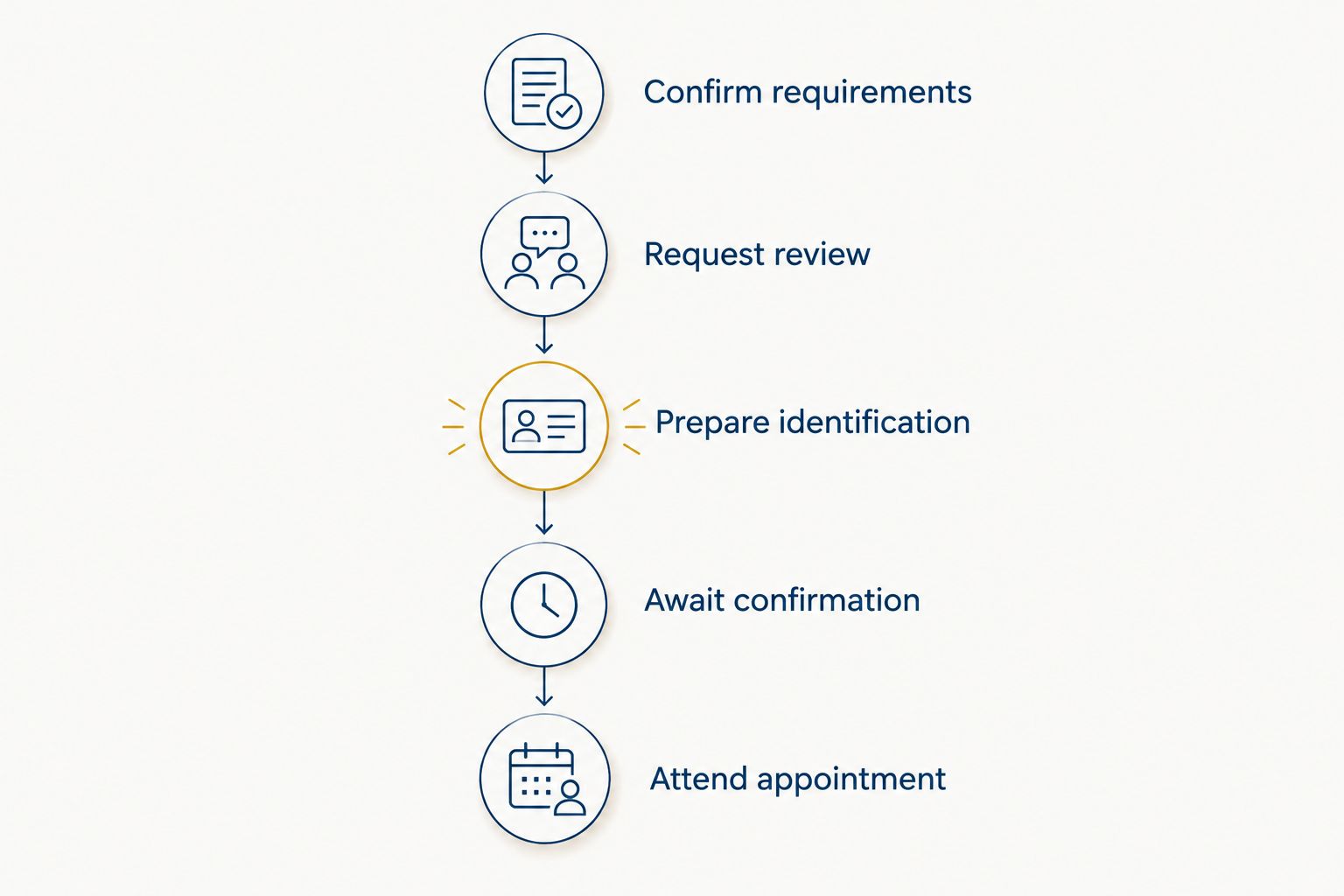
Use this sequence for a 2026 appointment. Keep 1 checklist per lease so instructions for separate properties or tenants do not get mixed together.
Confirm requirements
Ask the receiving party whether notarization is required and whether it accepts remote electronic notarization. Identify which signatures need notarization and whether there are separate witness or document-delivery instructions.
Request review
Contact the notary about document eligibility, the requested format, and the signers’ locations. Ask how to provide documents securely; do not send identification or lease files through an unconfirmed channel.
Prepare identification
Follow the identification instructions provided for your appointment. For remote notarization, complete the required Proof identity verification steps as directed; do not assume a scanned ID alone completes verification.
Await confirmation
Wait until Craigvetnotary contacts you before treating the appointment as confirmed. For mobile service, confirm Baltimore County availability, the meeting location, and the appointment arrangements directly.
Attend appointment
Have the required materials ready and follow the notary’s signing instructions. Ask when to sign rather than assuming every document should be signed in advance; different notarial acts have different procedures.
The sequence separates preparation from confirmation. Completing an inquiry or preparing identification does not, by itself, establish a booked appointment.
Practical guidance for repeat business notarizations
Businesses handling repeat lease paperwork need a consistent handoff, not an assumption that the next document matches the last one. Assign 1 coordinator to collect instructions, communicate with the notary, and relay confirmed arrangements to signers.
Run a 3-part review before each request: document requirements, signer readiness, and recipient acceptance. Keep the review attached to the relevant lease so a prior appointment’s instructions do not become an unintended default.
For a 2026 business workflow, use these checks:
- Identify the document and the signatures requiring notarization.
- Confirm whether the receiving party accepts the proposed format.
- Ask how multiple signers should participate, especially from different locations.
- Provide each signer with the confirmed preparation instructions.
- Keep legal questions separate from appointment coordination.
Do not assume repeat service means automatic eligibility or a standing appointment. Each request still needs the appropriate document review and confirmation.
FAQ
What’s the best notary option for a Maryland lease agreement?
Remote online notarization through Proof is the first option to consider for eligible documents when the receiving party accepts it. Choose an in-person route when the document requirements or signer circumstances call for one.
Does every Maryland lease agreement need notarization?
No, notarization is not a universal requirement for every Maryland lease agreement. Check the requirements for your particular document and ask an attorney if you need advice about legal validity or enforceability.
Can I notarize my Maryland lease online in 2026?
An eligible lease document can be considered for Maryland remote online notarization, subject to the applicable requirements. Confirm document eligibility, signer participation, identity verification, and recipient acceptance before arranging the appointment.
What identification should I prepare for remote notarization?
Prepare the identification specified in the instructions for your appointment. Follow the Proof verification process as directed and raise questions before the session rather than assuming any identification document will qualify.
Can the landlord and tenant join from different places?
Ask the notary to confirm participation requirements for each signer and location before booking. Do not assume that a remote format automatically permits every proposed signing arrangement.
Can I request a mobile notary in Baltimore County?
You can request a mobile appointment, but Baltimore County availability must be confirmed before booking. Your request is not a confirmed appointment until the service contacts you.
Should I sign my lease before the notary appointment?
Ask the notary for instructions before signing. The correct procedure depends on the requested notarial act, so neither signing everything early nor leaving everything unsigned is a universal rule.
Can Craig tell me whether my lease terms are legally correct?
No. Craig is not an attorney and cannot provide legal advice, interpret lease terms, or determine whether the agreement protects your interests; take those questions to an attorney.
Which lease notarization option should you choose?
Start with remote online notarization through Proof for an eligible lease, then confirm that the receiving party accepts it. Choose mobile service when you need an in-person meeting at an agreed location; consider a bank or independent office when a confirmed visit better fits your circumstances.
Resolve document requirements before coordinating calendars. That order keeps the appointment focused on the notarial act rather than unanswered questions about the lease.
One last thing
Ask the receiving party how it wants the completed document delivered before choosing the appointment format. Acceptance of a notarized signature and instructions for delivering the finished lease are separate questions—get both answers before signing.


