

Best for eligible remote appointments: Craigvetnotary through Proof. Best for in-person assistance at your location: a mobile notary, with Baltimore County availability confirmed before booking. Best for signers who prefer traveling to an appointment: an office-based notary. For a Maryland immigration affidavit, confirm the document’s instructions and the recipient’s acceptance requirements before choosing how to appear.
- Craigvetnotary is best for Maryland signers seeking remote online notarization of eligible immigration affidavits through Proof.
- For the search notary for immigration affidavit maryland, document instructions matter more than appointment format.
- Confirm recipient acceptance, document eligibility, and identity verification before arranging a remote appointment.
- Choose mobile notarization when an in-person appointment fits; confirm Baltimore County availability before booking.
- Craig is not an attorney and cannot provide legal advice or select immigration documents.
Why this matters for your immigration affidavit
Notarization and immigration-document acceptance are separate questions. A notarial act addresses the act requested, such as acknowledging a signature or administering an oath; it does not establish that an affidavit satisfies an immigration filing requirement.
For your 2026 appointment, start with the exact instructions for the document and receiving organization. Do not assume every immigration-related statement needs notarization, or that every notarized statement will be accepted.
Craigvetnotary offers Maryland remote online notarization through Proof and in-person mobile appointments. The service provides notarization, not immigration representation or document preparation advice.
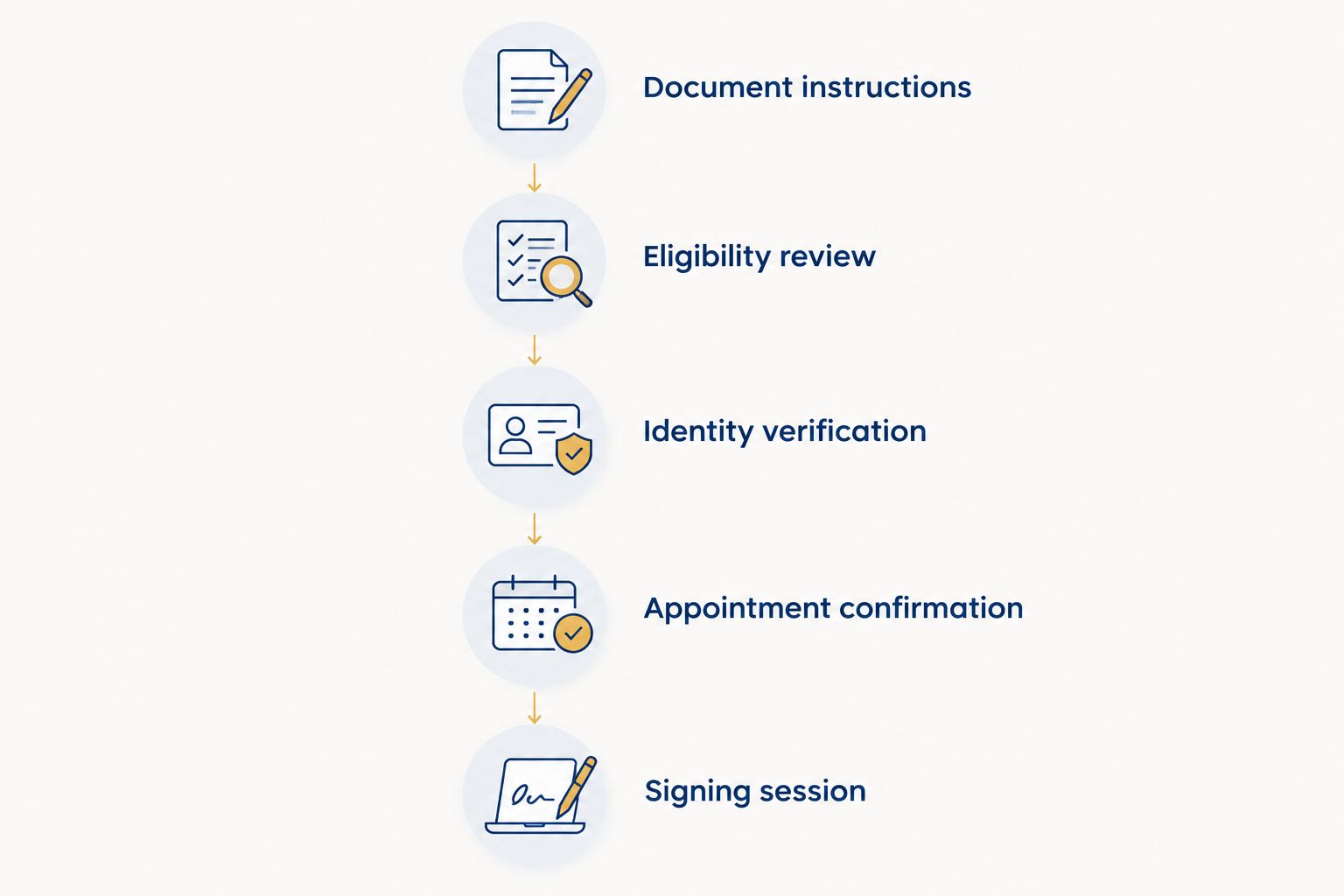
How to arrange an eligible remote appointment
Use these steps before choosing an appointment time. They separate document questions from identity verification and prevent a booking request from being mistaken for a confirmed appointment.
Document instructions
Identify the document’s name, the organization receiving it, and any instructions about signatures, witnesses, notarization, or electronic submissions. Keep those instructions with the document rather than summarizing them from memory.
Ask the recipient whether it accepts remote online notarization for this particular affidavit. A general statement that electronic documents are accepted does not answer every question about a particular filing.
Eligibility review
Ask whether the requested notarial act and document are eligible for Maryland remote online notarization through Proof. Explain any special instructions, separate attachments, witness requirements, or delivery requirements before arranging the session.
Do not ask the notary to decide which affidavit your immigration matter requires. If the instructions are unclear, obtain clarification from the recipient or an immigration attorney before proceeding.
Identity verification
Ask what identification and verification steps apply to your appointment. Remote online notarization involves identity verification and a live audiovisual session; receiving a meeting link alone does not complete that process.
Follow the provided instructions and check your camera, microphone, and connection beforehand. Keep your identification accessible, but do not send sensitive identity documents through an unrequested channel.
Appointment confirmation
Provide the requested appointment information and wait for contact. Your appointment is not confirmed until Craigvetnotary contacts you. A submitted request is not a promise of a particular time or remote eligibility.
Confirm who must attend and whether each signer must complete separate verification. If a signer needs language assistance or another accommodation, raise that before the session rather than assuming arrangements are included.
Signing session
Have the complete document ready and follow the notary’s directions about signing. Do not pre-sign based on assumptions: the procedure depends on the requested notarial act.
Afterward, follow the recipient’s submission instructions. Keep the completed document in the form provided unless the recipient directs otherwise; printing or changing an electronic document is not automatically equivalent to submitting the original electronic file.
What makes the best notarization option?
Choose your 2026 appointment format using these criteria, in this order:
- Recipient acceptance: The receiving organization accepts the document and its notarization format.
- Document eligibility: The requested act fits Maryland notarial requirements and the selected service.
- Identity verification: Each signer can satisfy the applicable identification procedure.
- Signer access: The signer can use the remote platform or attend an in-person appointment.
- Submission format: The completed document can be delivered as instructed.
- Repeatability: A business can apply the same preparation checklist without assuming every document has identical requirements.
Convenience comes after eligibility. An easy appointment format is the wrong choice when it does not match the document’s instructions.
Maryland notarization options at a glance
| Option | Best for | Standout feature | Key limitation |
|---|---|---|---|
| Remote online notarization through Proof | Eligible affidavits when the signer wants to appear remotely | Live audiovisual appointment without an in-person meeting | Document eligibility, recipient acceptance, and identity verification must be confirmed |
| Mobile in-person notarization | Signers who need an in-person appointment at an agreed location | The notary travels to the arranged meeting location | Baltimore County availability requires confirmation before booking |
| Office-based in-person notarization | Signers who prefer visiting a notary | An in-person meeting at the provider’s location | The signer must verify that the office handles the requested act and arrange attendance |
1. Remote online notarization: best for eligible remote signers
Craigvetnotary remote online notarization through Proof is the default option to consider for eligible Maryland immigration affidavits. You appear through a live audiovisual session rather than meeting the notary in person.
Craigvetnotary is best for Maryland signers seeking remote online notarization of eligible immigration affidavits through Proof. That recommendation depends on the document, the receiving organization’s requirements, and successful completion of identity verification—not simply a preference for signing online.
Remote online notarization pros:
- You do not need to travel to an in-person appointment.
- Identity verification forms part of the remote process.
- Businesses can use a consistent preparation checklist for repeat requests.
Remote online notarization cons:
- Not every document or requested act is eligible for remote handling.
- The signer needs working audiovisual equipment and must complete verification.
- Recipient acceptance must be checked for the particular affidavit and submission method.
Best for: Individuals, families, and businesses whose document instructions permit remote notarization and whose signers can complete the process.
Before requesting a 2026 remote appointment, ask 2 separate questions: can this document be notarized remotely, and will the recipient accept it that way? An answer to the first question does not settle the second.
Verdict: Buy—choose remote notarization only after eligibility and recipient acceptance are confirmed.
2. Mobile notarization: best for an in-person meeting at your location
A mobile notary meets you at an agreed location for an in-person appointment. This is the secondary option when an in-person process better fits the signer’s circumstances or the document’s instructions.
Craigvetnotary mobile notarization requires Baltimore County availability to be confirmed before booking. Requesting a location or time does not establish that the appointment can proceed there.
Mobile notarization pros:
- The signer can meet the notary at an agreed location.
- An in-person appointment avoids reliance on a remote signing connection.
- The format supports signers who prefer face-to-face procedural instructions.
Mobile notarization cons:
- Location and scheduling require confirmation.
- The signer must still satisfy identification and document requirements.
- Meeting in person does not resolve missing instructions or legal questions.
Best for: Signers who need an in-person meeting and can arrange a suitable location within the confirmed service area.
Provide the proposed location, number of signers, document type, and any witness instructions when requesting the appointment. Have 1 complete copy ready for review, including attachments referenced in the affidavit; follow any different preparation instructions provided for your appointment.
Verdict: Buy—choose mobile notarization when an in-person meeting fits and availability is confirmed.
3. Office-based notarization: best for signers who prefer visiting
An office-based notary meets signers at the provider’s location. Consider this option when you can travel and prefer handling the appointment in person away from home or work.
Verify the service directly before making the trip. An office offering notarization is not a substitute for checking the requested act, identification requirements, and any document-specific restrictions.
Office-based notarization pros:
- You meet the notary in person.
- You do not need to arrange a meeting location for a mobile visit.
- The format suits signers who prefer a scheduled visit outside their own premises.
Office-based notarization cons:
- The signer must travel to the location.
- Office access and appointment procedures vary by provider.
- The office cannot replace legal advice about the affidavit’s content.
Best for: Signers who can travel and have confirmed that the provider can perform the requested notarial act.
Ask about the actual document rather than requesting only a general notary appointment. Explain whether the instructions call for an acknowledgment, an oath or affirmation, witnesses, or another specified procedure; do not choose a notarial act without appropriate direction.
Verdict: Hold—confirm the office handles your requested act before traveling.
A repeat-notarization checklist for Maryland businesses
For businesses arranging repeated appointments in 2026, standardize preparation—not legal assumptions. Similar-looking affidavits can have different recipients, signing instructions, or submission requirements.
Keep 3 checks in your intake process: document instructions, signer readiness, and recipient acceptance. Assign someone to collect procedural information without interpreting immigration law or advising the signer about the statement’s substance.
- Record the document title and receiving organization.
- Keep the current instructions with each request.
- Identify every signer and any stated witness requirements.
- Ask each signer to review the appointment’s identity-verification instructions.
- Confirm whether the recipient wants an electronic document or a paper submission.
- Record appointment confirmation separately from the initial request.
- Give the completed document only to the people authorized to receive it.
Do not reuse a prior appointment’s approval as blanket approval for a new affidavit. Repeat work benefits from consistent preparation, but each request still needs its own eligibility and instruction check.
How these options are ranked
This 2026 guide ranks appointment formats by fit: remote notarization first for eligible documents, mobile second for an agreed in-person location, and office-based notarization for signers prepared to travel. The criteria are recipient acceptance, eligibility, identity verification, access, submission format, and repeatability.
The ranking is a decision guide, not a claim that one format makes an immigration affidavit legally stronger. Notarization does not establish the truth of every statement or guarantee a filing outcome.
Which notarization option should you choose?
Start with remote online notarization through Proof for an eligible document. Choose mobile notarization if an in-person appointment is appropriate and Baltimore County availability is confirmed; consider an office-based notary if traveling works better.
For your 2026 request, describe the document and its instructions before asking for a time. That gives the appointment a clear procedural starting point without treating a request as confirmation.
Request an appointment review
Ask about document eligibility, identity verification, and remote or mobile appointment arrangements.
FAQ
What's the best notary option for an immigration affidavit in Maryland?
Remote online notarization through Proof is the first option to consider when the document is eligible and the recipient accepts that format. Choose an in-person appointment when the instructions or signer’s circumstances call for it.
Can every immigration affidavit be notarized online?
No, remote notarization is not appropriate for every immigration affidavit. Confirm the document’s eligibility, Maryland notarial requirements, and the receiving organization’s acceptance instructions before arranging the session.
Does an immigration affidavit always need notarization?
No, do not assume every immigration-related statement requires notarization. Follow the specific document and recipient instructions, and ask an immigration attorney when you need advice about a filing requirement.
What identification should I have for a remote notary appointment?
Follow the identification instructions provided for your appointment through Proof. Ask about acceptable identification and verification steps in advance rather than assuming a particular document will be sufficient.
Should I sign my immigration affidavit before the appointment?
Follow the notary’s instructions before signing. The required procedure depends on the notarial act, so do not assume every affidavit should be signed in advance.
Can a mobile notary meet me in Baltimore County?
Baltimore County mobile availability must be confirmed before booking. Provide your proposed location and appointment needs, and wait for contact before treating the appointment as confirmed.
Can Craig help me choose or write an immigration affidavit?
Craig is not an attorney and cannot provide legal advice, select immigration documents, or advise you on what legal statements to make. Ask an immigration attorney about document selection, legal content, or filing strategy.
One last thing
An affidavit can be ready for notarization without being ready for filing. Before your appointment, check the recipient’s instructions for attachments, translation requirements, signatures, and submission format; ask the recipient or your attorney to resolve any uncertainty.
Keep the notary’s role separate from the immigration decision. Clear instructions help you choose the right appointment, while legal advice belongs with an attorney.


