

Best overall among documents you can notarize online in Maryland: an affidavit with suitable notarial wording and a receiving party that accepts a remote act. Best for repeat business needs: authorization documents. Best for family permissions: consent forms. In 2026, document type starts the review; it does not establish eligibility by itself. CraigVet Notary Services offers Maryland remote online notarization through Proof for eligible documents.
- Affidavits are a strong first option among documents you can notarize online in Maryland when their notarial requirements are clear.
- Business authorizations suit repeat appointments, but notarization does not establish a signer's authority.
- CraigVet Notary Services handles eligible Maryland remote online notarizations through Proof; confirm document requirements before booking.
- Ask the receiving party whether it accepts a remotely notarized document before you schedule.
Why document type is only the first check
A document can call for a notarized signature and still need more review before a remote appointment makes sense. Its notarial wording, any witness requirements, the signers' circumstances and the receiving party's instructions all matter. In 2026, the practical question is not simply whether a category appears on a list. It is whether your particular document and transaction can proceed through a Maryland remote online notarization.
Start with the person or organization that will receive the document. Ask whether it accepts a Maryland remote online notarization for this document and whether it requires a particular form of notarization. If the document will be recorded or submitted to an institution, ask about that institution's submission requirements as well. Notarization does not replace those checks.
CraigVet Notary Services serves individuals, families and businesses. Its remote service uses Proof for eligible documents; an in-person mobile appointment is a separate option. Do not treat an inquiry as a confirmed appointment. Wait for CraigVet to contact you about the document and appointment arrangements.
What makes a document a good remote-notarization candidate?
Use these criteria before choosing a remote appointment. They explain the ranking below; none substitutes for a review of the actual document.
- Clear notarial act: Identify what the document asks the notary to do. A signature acknowledgment and a sworn statement are different requests; do not choose one because it sounds convenient.
- Recipient acceptance: Confirm that the person, business, agency or recording office receiving the document accepts the proposed remote notarization.
- Signer readiness: Identify every person who must sign and ask how each signer will complete identity verification and participate in the appointment.
- Additional formalities: Check for witnesses, prescribed forms or other requirements beyond notarization. A notarial act does not satisfy a separate requirement by itself.
- Complete instructions: Bring the document and the receiving party's directions to the eligibility discussion. Do not guess at missing notarial wording or the legal effect of a form.
These checks are particularly useful for businesses scheduling repeat notarizations in 2026. A familiar document title does not guarantee that every version has the same instructions or that every recipient accepts the same process.
Maryland online notarization options at a glance
| Document category | Best for | What to check first | Key limitation |
|---|---|---|---|
| Affidavits | A statement that calls for a sworn notarial act | Required wording and recipient acceptance | Notarization does not verify the statement's truth |
| Business authorizations | Repeat signatures on business instructions | Signer's role and the receiving organization's directions | Notarization does not prove business authority |
| Family consent forms | Permission documented for another party | Recipient's form and any witness requirements | A notarized signature does not make the consent legally sufficient |
| Powers of attorney | An authority document with confirmed formalities | Form, witnesses and intended recipient | Legal validity involves more than notarization |
| Real estate documents | A transaction with lender or recording instructions | Acceptance and submission requirements | The recipient may impose additional conditions |
The 2026 default is an affidavit only when its notarial wording and destination are clear. Choose another category by what the document is meant to accomplish, not by a promise that every document in that category qualifies online.
1. Affidavits: best for a sworn statement with clear instructions
An affidavit records a person's statement and commonly calls for an oath or affirmation before the notary. That makes the requested act easier to identify when the form includes appropriate wording. An affidavit is the strongest general starting point for a remote appointment, provided the document is eligible and the recipient accepts a Maryland remote notarization.
Affidavit pros:
- The purpose of the notarization is usually stated in the document.
- You can ask the receiving party about remote acceptance before scheduling.
- The signer can identify the statement and the required notarial wording for review.
Affidavit cons:
- A missing or unsuitable notarial certificate needs attention before the appointment.
- A notary does not confirm that the affidavit's factual statements are true.
- The recipient can require a different process or additional documents.
Best for: An individual or business with a completed statement and clear directions from its recipient. Verdict: Hold until the required act and remote acceptance are confirmed; then request an appointment.
Do not sign in advance based on a general online guide. Ask how signing must occur for the specific notarial act. That question matters even when the document looks familiar from an earlier transaction.
2. Business authorizations: best for repeat business signatures
Business authorization documents can record an instruction, approval or designated signer's action. They suit a repeatable intake process: identify the form, the person signing and the recipient before each request. CraigVet Notary Services offers remote notarization for eligible documents, which gives Maryland businesses a service to ask about when these checks are complete.
Business authorization pros:
- A business can gather recipient instructions before requesting each appointment.
- The same intake questions work across recurring notarization needs.
- The signer and document purpose can be identified without assuming that the notary decides the underlying business issue.
Business authorization cons:
- Notarizing a signature does not establish that the signer has authority to bind the business.
- Different recipients can require different forms or additional evidence.
- Repeated use of a form does not establish that a new version is eligible online.
Best for: A Maryland business that can identify its signer, form and receiving party before scheduling. Verdict: Hold until the business confirms the signer's role and the recipient's remote-notarization requirements.
For 2026 repeat requests, keep a simple intake note for each document: its name, destination, required notarial act and any separate formalities. That is an appointment-preparation checklist, not a legal determination. If the recipient changes its instructions, check again rather than relying on the previous appointment.
3. Family consent forms: best for a specified permission
A family consent form communicates permission to a person or organization that requests it. The receiving party's own form and instructions are the starting point. If the form calls for notarization, ask whether the recipient accepts a Maryland remote act and whether anyone else must witness or sign.
Family consent form pros:
- The recipient can identify the form it wants completed.
- The named signer can check the requested notarial wording before an appointment.
- A remote appointment is an option to discuss when the document is eligible.
Family consent form cons:
- Notarization does not determine whether the person signing has the legal authority to give consent.
- The form can require witnesses or other steps beyond a notary.
- The recipient can reject a form that fails its own instructions even if the signature was notarized.
Best for: A parent, guardian or other signer with the recipient's current form and instructions. Verdict: Hold until the recipient confirms both the form and its acceptance of remote notarization.
Avoid changing legal wording yourself to make a document appear ready. Craig is not an attorney and cannot provide legal advice about who should sign, what a consent provision means or whether the completed form achieves its intended purpose.
4. Powers of attorney: best for a document with confirmed formalities
A power of attorney concerns authority granted to another person. Because its intended legal effect matters, notarization is only one part of the preparation. Confirm the required form, signatures, witnesses and intended recipient's instructions before asking about a remote appointment in 2026.
Power of attorney pros:
- The document's intended recipient can explain its acceptance requirements.
- The signer can identify the notarial request before scheduling.
- Remote notarization can be discussed once the document's eligibility is checked.
Power of attorney cons:
- A notary cannot advise you on the powers to grant or the document's legal effect.
- Witness or form requirements can remain even when a signature is notarized.
- The intended recipient can impose conditions that a notarial certificate alone does not resolve.
Best for: A signer whose document and recipient requirements have already been reviewed with an appropriate legal adviser when legal guidance is needed. Verdict: Wait for those requirements to be clear before requesting remote notarization.
Do not choose this category because a relative or business associate needs the document urgently. Urgency does not settle eligibility, signing formalities or recipient acceptance. Ask a qualified attorney about drafting, authority or legal sufficiency; ask the notary about the notarial appointment.
5. Real estate documents: best for a transaction with written instructions
Real estate documents often move between several parties. A lender, settlement professional or recording office can have specific instructions about signatures, notarization and submission. Identify the party receiving the document and confirm its requirements before selecting a remote appointment.
Real estate document pros:
- Transaction participants can provide document-specific signing instructions.
- The recipient can answer whether it accepts a Maryland remote notarization.
- You can separate the notarial question from the document's recording or submission requirements.
Real estate document cons:
- Acceptance can depend on the particular document and destination.
- Additional transaction instructions can extend beyond the notary's role.
- A completed notarization does not guarantee acceptance for recording or another purpose.
Best for: A signer with clear instructions from the lender, settlement professional or receiving office. Verdict: Wait for recipient and submission requirements before arranging the remote appointment.
This category ranks lower than an affidavit because a general document label tells you less about the full transaction. In 2026, obtain the specific instructions first. CraigVet Notary Services can address the notarial service for an eligible document, not the legal or transactional decision about what the document should say.
How the document categories were ranked
The ranking favors documents whose requested notarial act and receiving party are easier to identify before scheduling. Affidavits lead when they have clear wording and a known recipient. Business authorizations follow because a business can standardize its intake questions, while powers of attorney and real estate documents demand closer attention to requirements outside the notarization itself.
This is a planning order, not an eligibility ruling. Two documents with the same title can have different wording, signers and destinations. Confirm the requirements of the actual document rather than relying on its position in this list.
Prepare for a Maryland remote appointment
Work through these steps before you request a 2026 appointment. They help you present the question clearly; CraigVet must still contact you about the proposed appointment.
- Check document: Identify the document and locate the requested notarial wording. Note any witness instructions without trying to resolve their legal meaning yourself.
- Ask recipient: Confirm whether the receiving party accepts a Maryland remote online notarization and whether it has submission instructions.
- Confirm signers: Identify everyone expected to sign and ask whether they can participate in the proposed remote appointment.
- Verify identity: Ask what identity-verification steps apply through Proof. Do not assume that an earlier notarization removes this requirement.
- Complete session: Follow the appointment instructions CraigVet provides if the document is eligible and an appointment is arranged.
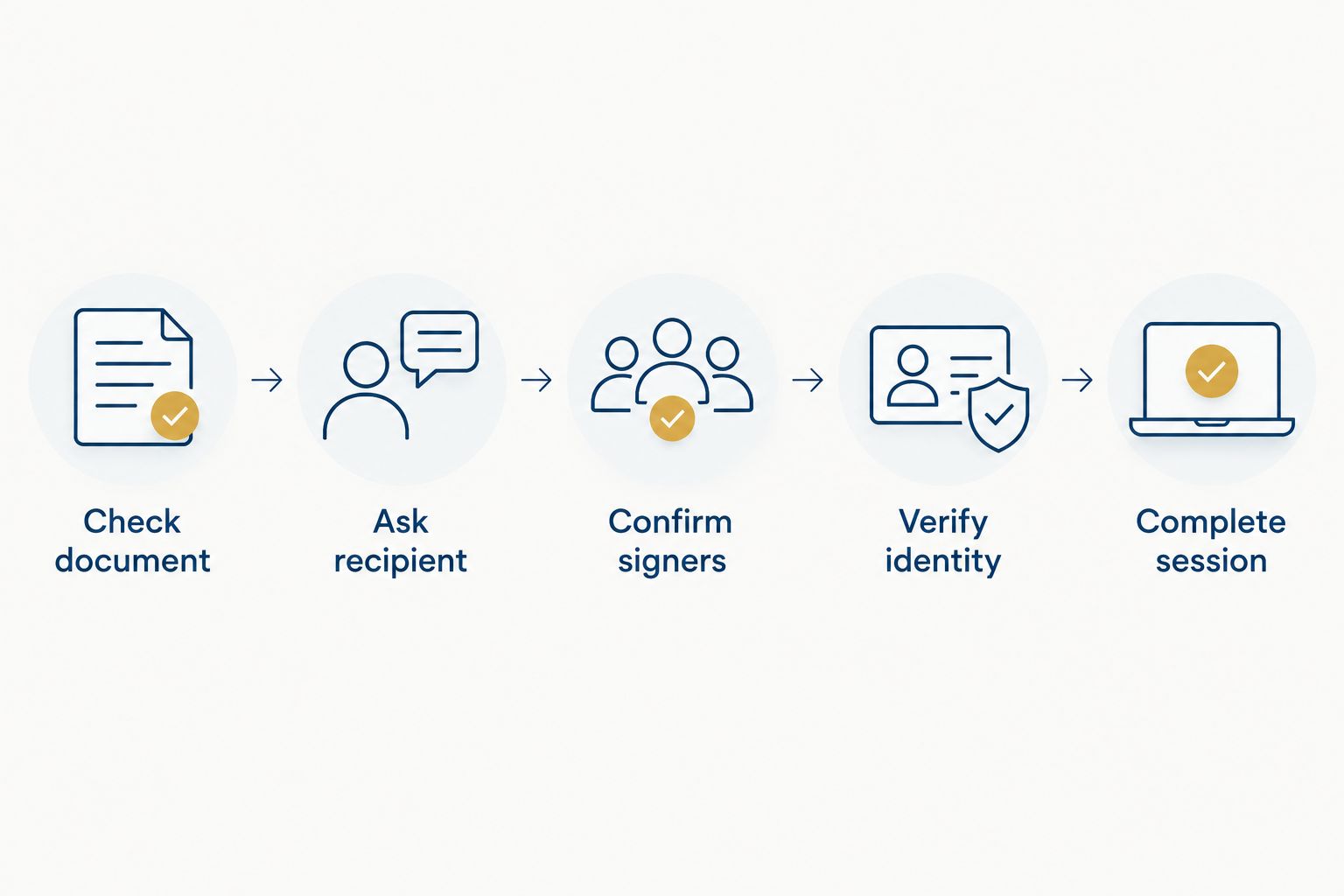
If you have repeat business requests, collect these answers for each document rather than treating a prior appointment as blanket approval. For individuals and families, the same sequence keeps the first conversation focused. Ask how to share any document or identification information for review instead of assuming an ordinary message is the right channel.
Ask About a Remote Appointment
Describe your document and its recipient so eligibility can be discussed.
Remote or mobile: which appointment should you request?
Remote online notarization is the first option to ask about for an eligible document when the receiving party accepts it. If the document or circumstances call for an in-person appointment, ask about CraigVet's mobile notary service instead. For a mobile appointment in Baltimore County, confirm availability before booking.
| Appointment type | Best for | First question | Limitation |
|---|---|---|---|
| Remote online through Proof | An eligible document with remote acceptance | Does the recipient accept the proposed remote act? | Not every document qualifies |
| In-person mobile | A signer seeking an in-person appointment | Is mobile service available for the requested location and appointment? | Availability must be confirmed |
Neither format makes the notary an attorney. Craig cannot provide legal advice, select legal provisions for you or guarantee that a receiving party will accept a document. If you need those answers, contact the recipient or an appropriate legal adviser before the notarial appointment.
Which documents should you choose for online notarization?
Start with a clearly worded affidavit when the recipient confirms remote acceptance. For repeat business needs, organize authorization documents by signer and recipient instructions before requesting a session. Use the same checks for consent forms; give powers of attorney and real estate documents extra attention to formalities and destination requirements.
CraigVet Notary Services is an option for Maryland individuals, families and businesses seeking remote online notarization through Proof for eligible documents. If eligibility or recipient acceptance remains unresolved, pause the appointment request and get the missing answer. An in-person mobile appointment is a separate service to discuss when remote notarization is not the right route.
FAQ
What documents can you notarize online in Maryland in 2026?
Eligible documents can be notarized remotely in Maryland, but a document category alone does not establish eligibility. Check the required notarial act, other formalities and whether the receiving party accepts remote notarization.
Can an affidavit be notarized online in Maryland?
An affidavit is a candidate for Maryland remote online notarization when its notarial requirements can be met and its recipient accepts the remote act. Confirm the specific document before scheduling.
Can a Maryland business use remote notarization for authorization forms?
A Maryland business can ask about remote notarization for an eligible authorization form. The business still needs to confirm the signer's authority and the receiving party's document requirements.
Can a consent form be notarized online in Maryland?
A consent form can be considered for remote notarization if the document is eligible and its recipient accepts that format. Check who must sign and whether witnesses or other formalities are required.
Can a power of attorney be notarized remotely?
A power of attorney requires document-specific review before you arrange remote notarization. Confirm form and witness requirements and seek legal advice about its effect from an attorney, not a notary.
Does remote notarization mean a real estate document will be recorded?
No. Ask the lender, settlement professional or recording office about its acceptance and submission requirements before scheduling a remote notarization.
How does identity verification work for a CraigVet remote appointment?
Ask CraigVet what identity-verification steps apply to your proposed appointment through Proof. Do not assume a previous appointment meets the requirements for a new document.
Is a CraigVet appointment confirmed when I send an inquiry?
No. Wait for CraigVet to contact you about the document and appointment arrangements. For an in-person mobile appointment in Baltimore County, confirm availability before booking.
One last thing
Ask the recipient about remote acceptance before you ask the notary about a time. That reverses a common source of wasted effort: a completed notarial act cannot change the receiving party's instructions. For any 2026 document, bring the answer to that question into the appointment discussion.


